
A property photo inventory is a systematic, organized collection of photographs documenting the condition, contents, and features of a property at a specific point in time. In real estate, this practice goes by the industry term condition documentation, though agents and property managers widely use "photo inventory" to describe the same process. Whether you manage a single rental unit or a portfolio of listings, a well-executed real estate photo inventory is your most reliable protection against disputes, your strongest marketing asset, and your clearest record of property value.
What is property photo inventory and why does it matter?
A property photo inventory is the organized photographic record of every room, fixture, appliance, and notable feature in a property, captured before a tenant moves in, before a listing goes live, or before a sale closes. It functions as both a legal document and a marketing tool, depending on how you use it.
The core purpose is verification. Photos create an objective, timestamped record that no verbal agreement or written description can fully replace. When a tenant disputes a damage charge or an insurance adjuster questions a claim, your photo inventory is the evidence that settles the argument. Without it, you are relying on memory and goodwill. Neither holds up in arbitration.

Named tools like Proofe, property management platforms like AppFolio, and inventory apps like Inventory Hive all treat photo documentation as a foundational feature. That tells you something: the industry has moved past the question of whether to do this. The question now is how to do it well.
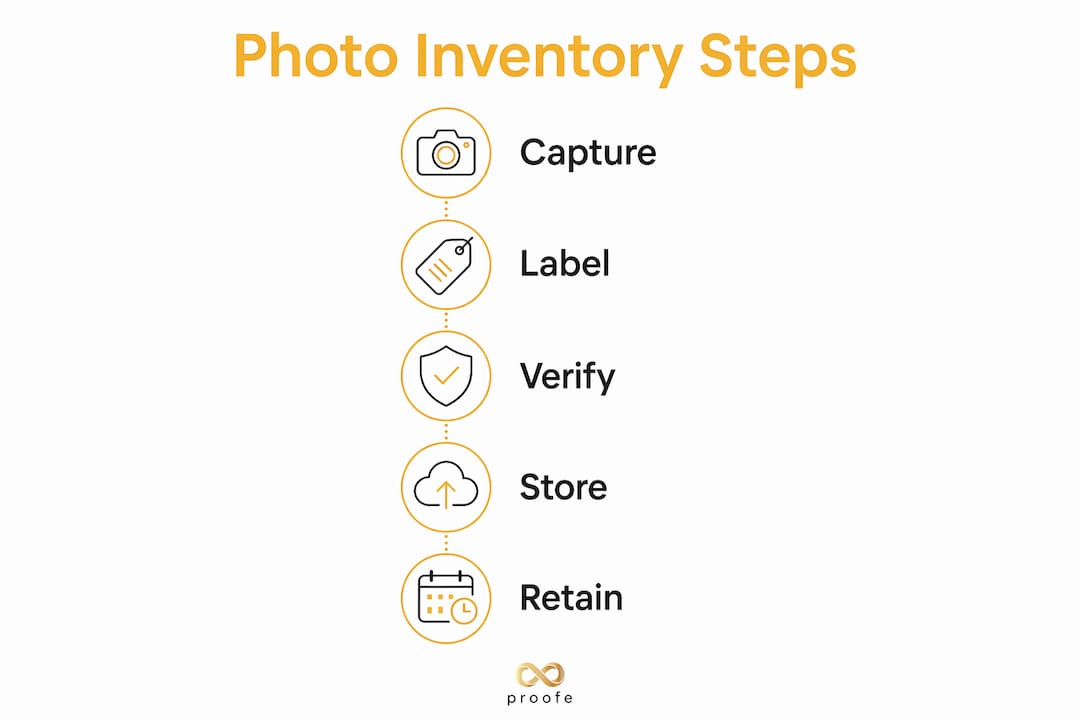
What are the best practices for creating an effective photo inventory?
Creating a photo inventory that holds up legally and looks professional in listings requires a repeatable process, not just a quick walkthrough with your phone. Follow these steps to build a reliable record every time.
-
Shoot every room systematically. Industry standards require 80 to 120 high-quality photos for a two-bedroom property, covering every room, fixture, and defect. That number sounds high until you realize courts and insurance adjusters expect comprehensive coverage, not highlights.
-
Lock in your camera angles. Replicating exact camera angles between check-in and check-out photos is the single most important factor in winning deposit disputes. Shoot from the doorway of each room, then from each corner. Document your positions so you can repeat them precisely at move-out.
-
Prioritize lighting. Shoot in natural daylight where possible, and supplement with overhead lights turned on. Dark or shadowy photos are rejected by adjudication schemes because they obscure the condition of surfaces and fixtures.
-
Use scale references for damage close-ups. Placing a coin or a ruler next to a damaged area gives adjusters and arbitrators a clear sense of size and severity. Photos without scale consistently struggle as proof in formal claims.
-
Capture serial numbers and model details. For appliances, HVAC units, and electronics, photograph the model and serial number label directly. Clear photos showing serial numbers lead to faster, more accurate insurance settlements because they remove any ambiguity about what was present and its value.
-
Use your smartphone confidently. Modern smartphone cameras with correct technique are sufficient to create legally valid, detailed photo inventories. Professional camera gear is not required. What matters is lighting, angle consistency, and coverage.
Pro Tip: Pair your photos with a structured digital report that labels each image by room and item. A photo labeled "Kitchen, dishwasher, serial number" is far stronger evidence than an unnamed file in a folder.
How does a photo inventory benefit real estate professionals?
The benefits of property inventory extend well beyond compliance. Here is where a strong photo record pays off directly for agents and property managers:
- Deposit dispute support. A timestamped photo inventory taken at check-in gives you clear before-and-after comparisons at check-out. Without this, tenants can contest any deduction and often win by default.
- Faster insurance claim settlements. 70% of survivors without documented photo inventories were still displaced a year after the LA wildfires due to unresolved claim disputes. Visual proof accelerates adjuster decisions and increases payout accuracy.
- Stronger listings. Verified, detailed photos of a property's condition build buyer and tenant confidence before they ever schedule a showing. Listings with thorough photo documentation convert at higher rates because they signal transparency.
- Tenant trust and smoother check-ins. Sharing the photo inventory with a new tenant at move-in sets clear expectations. Both parties agree on the property's condition upfront, which reduces friction at move-out.
- Maintenance tracking. A photo inventory list updated over time gives you a visual history of wear, repairs, and upgrades. This is useful for budgeting, contractor briefings, and demonstrating property upkeep to prospective buyers.
The importance of photo inventory for landlords specifically comes down to liability reduction. A well-documented property is harder to dispute and easier to insure.
What tools and software help manage photo inventories effectively?
The right tools turn a folder of photos into a searchable, legally defensible record. Here is what to look for in 2026.
Structured, timestamped, cloud-backed digital inventories are now considered superior evidence to manual photo albums by insurance adjusters. Metadata, including GPS coordinates and timestamps embedded in each image file, provides independent verification that no paper record can match.
| Feature | Why it matters |
|---|---|
| Automatic timestamping | Proves when photos were taken, critical for legal and insurance use |
| Cloud storage | Protects records from device loss and enables sharing with adjusters or attorneys |
| Folder organization by property | Keeps inventory photos and damage photos separate, preventing data confusion |
| Report generation | Converts photos into formatted documents accepted by adjudication schemes |
| Smartphone compatibility | Allows on-site capture without additional equipment |
Apps built specifically for real estate professionals, including Proofe, offer AI-enhanced photo quality directly from your smartphone. Proofe's AI photo enhancer corrects lighting and sharpness automatically, which means your inventory photos meet professional standards without post-processing expertise.
Inventory and damage photos should be stored in separate organized folders at the property level. Mixing them creates unsearchable data sets and weakens your evidence when you need it most.
How to create a photo inventory that meets legal and insurance requirements
Legal compliance in photo inventory comes down to three factors: coverage, metadata, and retention.
Coverage means photographing every room, every fixture, and every item of value, not just the ones you expect to be disputed. Adjudication schemes and courts expect a complete record. Gaps in coverage are treated as gaps in evidence.
Metadata means your photos carry embedded timestamps and, where possible, GPS data. Digital, timestamped metadata-rich photo inventories are the preferred evidence format for insurance and legal bodies in 2026. Smartphone cameras generate this data automatically, but you need to store photos in a system that preserves it rather than stripping it during upload.
Retention means keeping your records long enough to matter. Experts recommend retaining property inventory photos for the full tenancy duration plus five years afterward. This covers retrospective insurance claims and legal disputes that surface long after a tenant has moved out.
Pro Tip: Build a standardized checklist for every property type you manage. A two-bedroom apartment checklist should specify exactly which shots to take in each room, in what order. Consistency across your portfolio makes comparisons faster and your evidence stronger.
Separate your property inventory list into two categories: condition photos taken at check-in and check-out, and damage photos taken when an incident occurs. Storing these in separate folders by property prevents confusion and keeps your evidence organized when a claim arises.
How to apply photo inventories strategically for listings and tenant management
A photo inventory is not just a legal safety net. Used well, it becomes a competitive advantage in both marketing and tenant relations.
- Build compelling listings. Detailed, well-lit photos of every room, including storage areas, utility spaces, and outdoor features, give prospective buyers and tenants a complete picture. Listings that show everything signal confidence and reduce time-wasting inquiries.
- Smooth check-in and check-out. Share the photo inventory with tenants at move-in as part of your welcome package. Ask them to review and sign off on it. This single step eliminates most move-out disputes before they start.
- Track maintenance visually. Update your photo record after every repair or upgrade. A visual maintenance log helps you justify rental price increases, demonstrate property care to buyers, and brief contractors accurately without repeated site visits.
- Enhance client confidence. Buyers and tenants respond to transparency. Sharing a thorough condition report backed by photos positions you as a professional who has nothing to hide. That trust shortens sales cycles and improves tenant retention.
- Collaborate digitally. Cloud-based photo inventories can be shared instantly with co-agents, property managers, attorneys, or insurance adjusters. Tools like Proofe for property managers make this sharing process fast and organized, without emailing large file batches.
Key takeaways
A property photo inventory is the most cost-effective legal and marketing tool available to real estate professionals, and its value depends entirely on consistency, coverage, and proper storage.
| Point | Details |
|---|---|
| Definition and purpose | A photo inventory documents property condition at a specific time, serving as legal evidence and a marketing asset. |
| Photo quantity and coverage | Industry standards call for 80 to 120 photos per two-bedroom property, covering every room, fixture, and defect. |
| Angle consistency | Replicating exact camera angles at check-in and check-out is the key factor in winning deposit disputes. |
| Metadata and retention | Store timestamped, cloud-backed photos and retain them for the tenancy period plus five years for legal protection. |
| Separate inventory and damage photos | Keep condition photos and damage photos in separate folders to maintain clear, searchable evidence. |
Why photo inventory is the habit most agents skip until it's too late
I have reviewed a lot of property documentation over the years, and the pattern is always the same. Agents and property managers who skip structured photo inventories do not feel the consequences until a dispute lands in their lap. By then, the missing evidence is irreplaceable.
The most common mistake I see is not the absence of photos. It is the absence of system. Someone takes 20 photos on move-in day, dumps them in a phone folder, and considers the job done. Six months later, when a tenant disputes a scratch on the hardwood floor, those photos are unsorted, unlabeled, and missing the angle that would have settled the argument in 30 seconds.
The good news is that fixing this does not require expensive equipment or a photography background. Smartphone cameras with correct technique are fully capable of producing legally valid inventory photos. What you actually need is a checklist, a consistent angle protocol, and a cloud folder structure you use every single time.
The professionals who build this habit early find that it pays off in ways beyond dispute avoidance. Their listings look more thorough. Their tenants feel more respected. Their insurance claims move faster. A photo inventory is not a defensive measure. It is a professional standard that separates organized operators from reactive ones.
— Richard
Take your property photo inventory further with Proofe
If you want to put these practices into action without investing in camera equipment or editing software, Proofe is built exactly for that.

Proofe lets you capture, AI-enhance, and download MLS-ready property photos directly from your smartphone. The three-step process, shoot, enhance, and download, takes minutes per property. Your first five photos are free, so you can test the quality before committing. For agents and property managers who need professional listing photos delivered the same day, Proofe removes every technical barrier between your phone and a polished, compliant photo inventory. Start your first property today at proofe.app.
FAQ
What is a photo inventory in real estate?
A photo inventory is a systematic collection of timestamped photographs documenting the condition and contents of a property at a specific point in time. It serves as legal evidence in disputes and as a marketing asset for listings.
How many photos does a property inventory require?
Industry standards in 2026 call for 80 to 120 high-quality photos for a two-bedroom property, covering every room, fixture, and defect. Fewer photos create gaps that weaken your evidence in disputes or insurance claims.
Can I use my smartphone for a property photo inventory?
Yes. Modern smartphone cameras with correct technique are sufficient to create legally valid, detailed photo inventories. Professional camera equipment is not required; lighting, angle consistency, and coverage matter more than gear.
How long should I keep property inventory photos?
Experts recommend retaining property inventory photos for the entire tenancy period plus five years afterward. This covers retrospective insurance claims and legal disputes that may arise long after a tenant moves out.
What is the difference between inventory photos and damage photos?
Inventory photos document the general condition of a property at check-in or check-out, while damage photos record specific incidents or defects. Storing them in separate folders by property keeps your evidence organized and searchable when a claim arises.