
Listing photos are the single most influential marketing variable in determining how much a home sells for. All buyers now start their home search online, and photos are the first filter they use to decide whether a property is worth their time. Professional real estate photography, the industry term for high-quality listing imagery, has been shown to add between $3,000 and $11,000 to a final sale price while cutting days on market by roughly three weeks. Data from Redfin, NAR, and Benham & Reeves all confirm the same pattern: better photos produce better outcomes, and the gap is not small.
Why listing photos affect sale price from the first click
The connection between listing photos and sale price starts before a buyer ever reads the address. Buyers spend only 1 to 3 seconds on the first listing photo before deciding to click through or scroll past. That window is shorter than a traffic light. If your first photo does not stop the scroll, the price, the square footage, and the neighborhood description never get read.
Eye-tracking research confirms that the hero image, the first photo displayed in a listing, functions as a bottleneck for buyer consideration. Once a buyer does click through, they spend roughly 20 seconds analyzing that hero image before deciding whether to continue. That means the entire evaluation process for most buyers hinges on one photograph taken before the listing went live.
Daytime exterior shots consistently outperform interior photos as hero images. A well-lit front facade communicates curb appeal, neighborhood quality, and property condition in a single frame. Interior shots, even beautiful ones, require more cognitive work from the buyer. They have to mentally place themselves inside a space they have never seen from the outside.
"The hero image is a bottleneck for buyer consideration. Without an effective first photo, price and other listing details go unnoticed." — Wire Associates experiment
Pro Tip: Test two or three candidate hero photos with a small group of friends or colleagues before publishing. Ask them which one makes them want to see more. This informal A/B test takes 10 minutes and can meaningfully improve your click-through rate.
How photo quantity and quality connect to asking price
The relationship between photo count and listing price is more direct than most sellers realize. Research from Benham & Reeves found that homes with five or more photos command average asking prices roughly £80,000 higher than listings with four or fewer. That is not a luxury market phenomenon. The same pattern holds across price tiers and property sizes.

Here is how photo quantity maps to typical listing outcomes:
| Photo count | Typical outcome |
|---|---|
| 1 to 4 photos | Lower asking price, longer market time, fewer showings |
| 5 to 9 photos | Competitive positioning, average to above-average engagement |
| 10 or more photos | Maximum buyer confidence, strongest price outcomes |
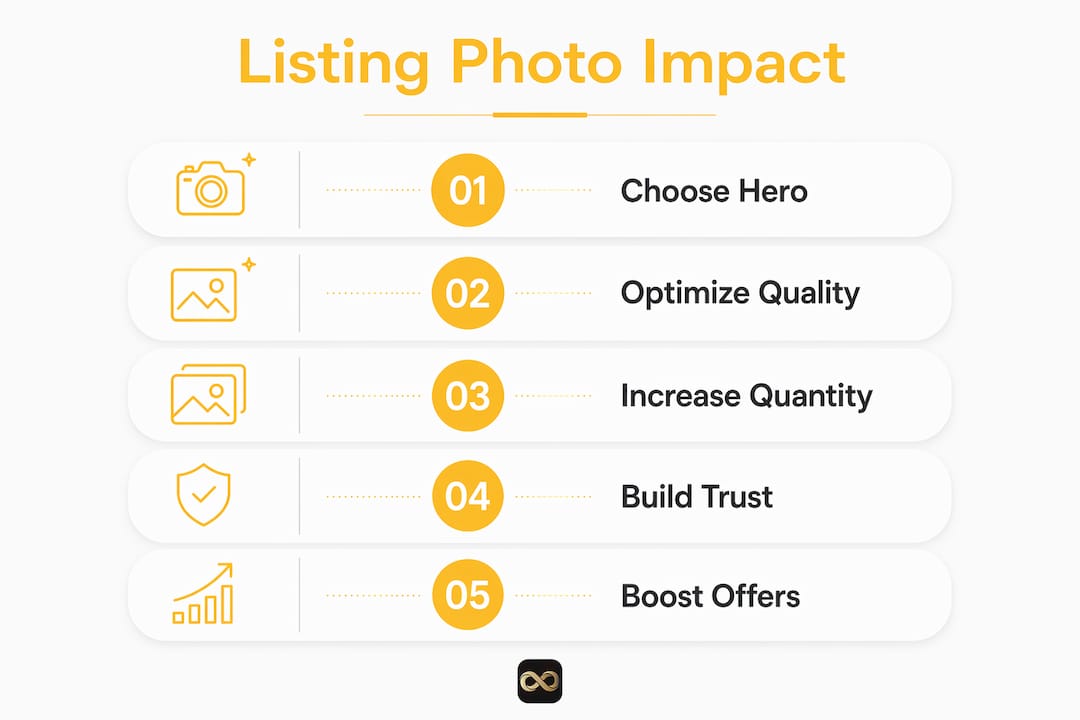
The quality effect compounds the quantity effect. Listings with professional photos receive 118% more online views than those with amateur shots. More views mean more showings, and more showings mean more competitive offers. The math is straightforward.
Amateur photos hurt in two specific ways. First, poor lighting and awkward angles make rooms look smaller and darker than they are. Second, blurry or cluttered shots signal to buyers that the seller is not serious, which invites lower offers. Buyers use photo quality as a proxy for how well the property has been maintained.
- Listings with fewer than 5 photos are consistently priced lower, regardless of actual property condition
- Professional photography reduces days on market by an average of three weeks
- Higher online view counts from quality photos directly increase the number of competing buyers
Pro Tip: For smaller homes or condos, photo quality matters even more than quantity. A 700-square-foot unit with 8 excellent photos will outperform a 1,200-square-foot unit with 12 mediocre ones. Focus on light, staging, and angle before you focus on coverage.
How photos build buyer trust and drive competitive offers
Photos in real estate listings function as trust signals, not just marketing visuals. This is explained by what researchers call warranting theory: buyers assign more credibility to visual evidence that is difficult to fake. A clear, well-lit photo of a renovated kitchen tells a buyer something real. A vague or stock image tells them nothing, and that uncertainty costs you money.
Stock photos reduce buyer trust and engagement compared to actual property photos. This is not unique to real estate. Marketplace data from platforms like eBay and Airbnb shows the same pattern: listings with authentic, detailed photos achieve higher sell-through rates and better pricing than those with generic or low-quality imagery. On Airbnb, properties with professional photos consistently command higher nightly rates and booking frequency.
"Listing photos serve as a trust signal and buyer confidence booster, especially in online listings with unknown sellers." — Marketplace research review
The trust mechanism works in both directions. When buyers feel confident about what they are seeing, they are more willing to commit to a showing and, eventually, an offer. When multiple buyers feel that confidence simultaneously, you get competitive bidding. That competition is what pushes final sale prices above asking.
- Authentic photos of actual rooms and features build credibility that stock or staged-only photos cannot replicate
- Buyers in online-first markets have no seller reputation to rely on, so photos carry the full trust burden
- Improved listing photos increase online views by over 100%, which directly supports higher closing prices through buyer competition
The practical implication is clear. Every photo you publish is either building or eroding buyer confidence. There is no neutral image.
Practical steps to maximize sale price through listing photos
Getting the most from your listing photos does not require a Hollywood production budget. It requires a clear strategy applied consistently. Here is what works, in order of impact.
-
Lead with a strong daytime exterior shot. Shoot the front of the property in the morning or late afternoon when shadows are soft and the sky is bright. Avoid midday shots with harsh overhead light. This is your hero image and your first impression.
-
Cover all key rooms and spaces. Include the living room, kitchen, primary bedroom, bathrooms, and any standout features like a deck, backyard, or renovated space. Buyers want to mentally walk through the property before scheduling a showing.
-
Stage and clean before you shoot. Remove personal items, clear countertops, and add simple touches like fresh towels or a bowl of fruit. Buyers respond to move-in readiness. A cluttered photo signals work and expense, not value.
-
Use professional photography or a quality phone setup with editing. You do not need a $5,000 camera. You need good light, a steady hand, and post-processing that corrects exposure and color. Tools like real estate photo editing services can transform a decent phone shot into a professional-grade image.
-
Test your hero image before publishing. Show two or three exterior options to people unfamiliar with the property and ask which one makes them want to see more. This takes minutes and removes guesswork from the most important decision in your listing.
-
Publish at least 10 photos. More coverage reduces buyer uncertainty and signals that you have nothing to hide. Listings with 5 or more photos consistently outperform those with fewer, and the effect strengthens as photo count increases toward 10 to 15.
Photo-driven buyer engagement also affects your negotiation position. When a listing generates multiple showings quickly, buyers know they are competing. That momentum reduces price reductions and keeps your negotiating leverage intact through closing.
Pro Tip: If you are selling a home with a strong backyard, pool, or outdoor entertaining space, consider making that your hero image instead of the front exterior. Match the hero photo to the property's strongest selling point, not just convention.
Key takeaways
Listing photos are a direct driver of sale price because they control buyer attention, build trust, and generate the competitive interest that pushes final prices higher.
| Point | Details |
|---|---|
| Hero image is the price gateway | Buyers decide in 1 to 3 seconds whether to click, making the first photo your highest-leverage asset. |
| More photos mean higher asking prices | Listings with 5 or more photos command significantly higher prices than those with 4 or fewer. |
| Professional photos boost views by 118% | More views create more showings, and more showings create the competition that raises closing prices. |
| Photos function as trust signals | Authentic, clear photos reduce buyer uncertainty and increase the likelihood of competitive offers. |
| Photo strategy affects negotiation leverage | Faster buyer momentum from strong photos reduces price reductions and strengthens your position at closing. |
What I've learned after watching listings win and lose on photos alone
I have reviewed hundreds of listings over the years, and the pattern is consistent enough to be a rule: the listings that sell fast and above asking almost always have excellent photos. The ones that sit and eventually reduce price almost always have mediocre ones. The property itself is often comparable.
What surprises most sellers is that this is not about luxury homes. A $250,000 starter home with 12 clean, well-lit photos will outperform a $400,000 home with 6 dark, cluttered ones. Buyers do not adjust their expectations based on price tier. They respond to what they see, and they see photos first.
The other thing I have noticed is that agents who invest consistently in photo quality build a brand advantage over time. Buyers and sellers start to associate their listings with a certain standard. That reputation compounds. It is not just about one sale. It is about every referral that follows.
The shift to digital-first home buying has made photos more consequential, not less. Buyers are making shortlists before they ever contact an agent. If your listing does not make the shortlist, you are not in the running. You can boost your home's sale value through many strategies, but none of them matter if buyers never click through to read about them.
The investment in professional-quality photos is one of the highest-ROI decisions a seller or agent can make. The cost is low. The upside is measured in thousands of dollars and weeks of time.
— Richard Lopez
Get professional listing photos without the professional price tag
You do not need to hire a photographer and wait days for edited files. Proofe lets you shoot listing photos directly from your smartphone and delivers AI-enhanced, MLS-ready images the same day.
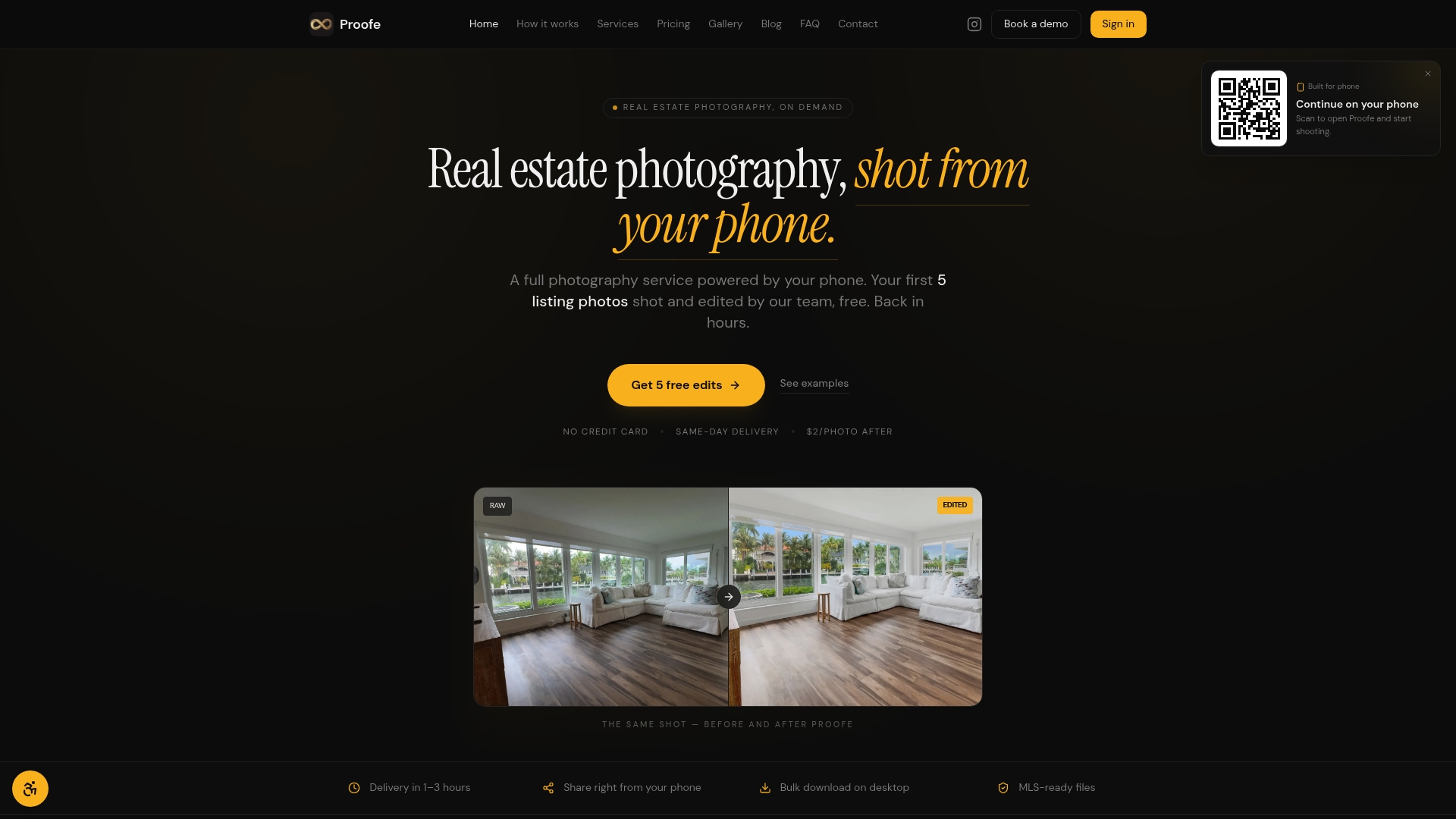
The process is three steps: shoot, AI-enhance, and download. Proofe's editing includes sky replacement, HDR processing, object removal, and color correction. Your first five photos are free, so you can see the quality before you commit. For agents managing multiple listings or homeowners who want to maximize their sale price without adding to their budget, Proofe's real estate photo app is the fastest path from phone shot to professional listing image. Start today at proofe.app.
FAQ
Do listing photos really affect the final sale price?
Yes. Professional photos add an estimated $3,000 to $11,000 to a home's sale price and reduce days on market by roughly three weeks, according to Redfin analysis and market studies.
How many photos should a listing have?
Listings with five or more photos consistently command higher asking and sale prices than those with four or fewer. Aiming for 10 to 15 photos gives buyers full coverage and maximizes confidence.
What makes a good hero image for a listing?
A clear, well-lit daytime exterior shot is the top-performing hero image for most properties. Buyers spend about 20 seconds analyzing it before deciding whether to continue, so it needs to communicate condition and appeal immediately.
Can phone photos work for real estate listings?
Yes, with the right technique and editing. Good lighting, a steady shot, and professional post-processing can produce MLS-ready images from a smartphone. Tools like Proofe's listing photo editing service handle the editing automatically.
Why do fewer photos lead to lower sale prices?
Fewer photos increase buyer uncertainty, which reduces confidence and competitive interest. Buyers interpret a thin photo set as a reason to offer less or skip the showing entirely, which weakens the seller's negotiating position.