
Real estate visual marketing is defined as the strategic use of photography, video, and graphic design to showcase properties and emotionally engage potential buyers before they ever step inside. Industry professionals also call this discipline property visual merchandising or listing visual strategy. Understanding what is real estate visual marketing means recognizing that your photos, videos, and graphics are not decoration. They are your primary sales tool. 97% of home buyers start their search online, and the visual package you publish is the first and often only impression you get to make.
What is real estate visual marketing and why does it matter?
Real estate visual marketing is the practice of using images, video, and designed graphics to present a property's best features and guide buyers toward scheduling a showing. The goal is not just to document a space. The goal is to make a buyer feel something about it.
The numbers behind this practice are hard to ignore. Visual content earns 650% higher engagement than text-only posts. That gap means a listing with strong photos and a short walkthrough video reaches far more buyers than a text description ever could.
Buyers also decide fast. The eight-second rule describes how quickly a buyer decides whether to keep scrolling or click into a listing. Eight seconds is not enough time to read a description. It is just enough time to react to a photo.
Memory plays a role too. People retain 65% of visual information after three days, compared to just 10% for written text. That retention gap explains why a buyer who toured 12 listings online still remembers the one with the bright kitchen photo and the sunset backyard shot.
"Visual marketing is more than aesthetics. It's about simplifying information and aiding buyer recall." — Visual Content Importance in Digital Marketing
Here is what drives the urgency for agents and property managers:
- Buyers view a median of seven homes before making an offer, so your listing competes against six others in every buyer's mental shortlist.
- Video viewers are 85% more likely to schedule a showing than buyers who only see photos.
- Agents who treat visuals as primary, not secondary, earn 27% higher click-through rates on their listings.
These figures point to one conclusion: visual content is not a nice-to-have feature of your marketing. It is the marketing.
What are the key visual marketing techniques in real estate?
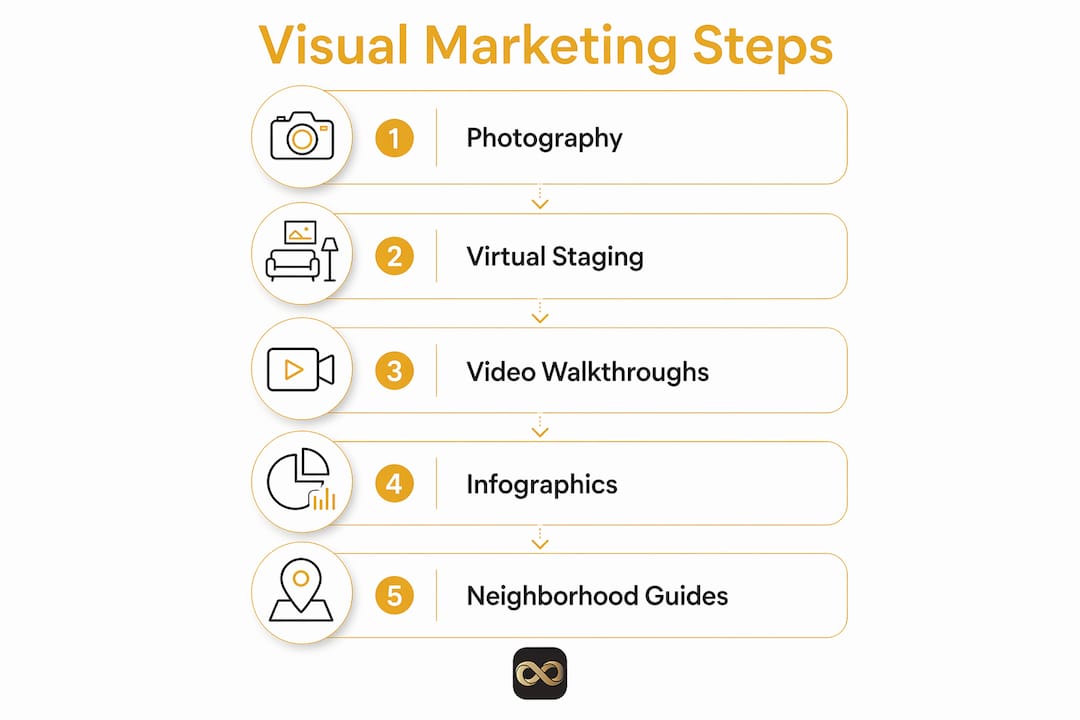
The core techniques in real estate visual content fall into four categories: professional photography, AI virtual staging, video, and designed graphics. Each serves a different purpose in the buyer's decision process.
Professional photography remains the foundation. Wide-angle lenses capture room scale accurately. Proper lighting eliminates the dark corners that make spaces feel smaller than they are. Consistent color correction across a full photo set creates a polished, trustworthy impression. You can learn the fundamentals of shooting listing photos with a smartphone if a professional photographer is not in your budget for every listing.

AI virtual staging digitally furnishes empty or dated rooms, making them more buyer-friendly and supporting faster sales. An empty living room is hard for most buyers to visualize. A virtually staged version with a sofa, rug, and art on the walls tells a clear story about how the space functions. AI-driven renovation previews take this further. They show sellers what a kitchen remodel could look like without spending a dollar upfront, which is a powerful tool for winning listing appointments.
Video is the highest-engagement format in the stack. Property walkthrough videos work well for MLS and email. Short vertical clips edited for Instagram Reels or TikTok reach buyers who never visit a listing portal. The key is matching the format to the platform. A 90-second horizontal walkthrough video will not perform on Instagram. A 15-second vertical highlight reel will.
Infographics and neighborhood guides round out the toolkit. A one-page graphic showing school ratings, commute times, and nearby amenities answers the questions buyers ask before they ask them. This type of real estate visual content also performs well on Pinterest and Facebook, where buyers in the research phase spend time.
Pro Tip: Shoot your highest-impact feature first. Whether it's the kitchen, the view, or the master suite, lead with the room that will stop a buyer's scroll. Everything else supports that anchor image.
How do agents build a powerful visual marketing stack?
A visual marketing stack is the layered combination of content types and tools an agent uses to market a single listing across multiple platforms. The visual stack concept layers professional photos, virtual staging, and social media-ready vertical video clips tailored for platform algorithms.
Building yours follows a clear sequence:
- Plan before you shoot. Walk the property before your photo session. Identify the three to five features that will anchor your visual story. Decide which rooms need virtual staging and which are ready as-is.
- Capture the full photo set. Shoot MLS-ready horizontal photos first. Then capture vertical shots and short video clips for social media. One visit should produce assets for every platform.
- Apply AI enhancements. Use AI tools to correct lighting, replace overcast skies, and stage empty rooms. AI tools speed up content production and repurposing across platforms significantly.
- Adapt for each platform. MLS requires horizontal, high-resolution images. Instagram favors vertical formats and bright, high-contrast edits. Facebook supports longer video. LinkedIn works for commercial listings. Using the same photo set everywhere is a common mistake. Adapting formats for platform constraints and user behaviors is what separates average listings from standout ones.
- Schedule and publish with speed. Listings that go live with a complete visual package on day one outperform those that add photos later. Buyers who see an incomplete listing rarely return.
Pro Tip: Build a shot list template you reuse for every property. Include room names, angles, and the platform destination for each shot. This cuts your on-site time and makes editing faster.
The biggest mistake agents make is treating photography as an afterthought. Integrating visuals early in your marketing workflow, before the listing goes live, is what produces a complete, competitive package.
How to apply visual marketing strategies effectively
Knowing the techniques is one thing. Applying them consistently across every listing is where most agents struggle. The table below compares two common approaches.
| Approach | What It Looks Like | Typical Outcome |
|---|---|---|
| Visuals as afterthought | Photos taken on listing day, no staging, same images on all platforms | Lower click-through, fewer showings |
| Visuals as primary strategy | Pre-planned shot list, AI staging, platform-adapted content | Higher engagement, faster offers |
The practical steps for applying visual marketing strategies well come down to three habits:
- Start with the strongest feature. Buyers spend their eight seconds on your lead image. If that image is a hallway or a utility room, you have already lost them. Lead with the kitchen, the view, the pool, or whatever makes this property worth clicking.
- Balance quality and speed. You do not need a full-day photo shoot for every listing. Smartphone photography combined with AI photo enhancement produces MLS-ready results in hours. Tools like Proofe's AI photo enhancer let you shoot on your phone and deliver professional-quality images the same day.
- Review your listing photos the way a buyer would. Open your listing on your phone. Scroll through the photos quickly. If you would keep scrolling past your own listing, your visuals need work. Check out why listing photos affect sale price to understand the financial stakes of getting this right.
Common pitfalls to avoid include dark interior shots without flash or HDR correction, exterior photos taken on overcast days without sky replacement, and vertical photos uploaded to MLS in the wrong orientation. Each of these errors signals to buyers that the listing was not prepared carefully. That perception extends to how they feel about the agent and the property.
Key takeaways
Real estate visual marketing is the single most decisive factor in whether a listing gets clicked, remembered, and toured.
| Point | Details |
|---|---|
| Definition is clear | Visual marketing uses photos, video, and graphics to engage buyers before they visit a property. |
| Speed of first impression | Buyers decide in eight seconds, so your lead image must be your strongest feature. |
| Video drives showings | Buyers who watch property videos are 85% more likely to schedule a showing. |
| Stack beats single format | Layering photos, AI staging, and platform-adapted video produces the best results. |
| Visuals must come first | Agents who prioritize visuals earn 27% higher click-through rates than those who treat them as secondary. |
The uncomfortable truth about visual marketing in real estate
I have reviewed hundreds of listing packages over the years, and the pattern is always the same. Agents who struggle with slow sales are almost never struggling with pricing or location. They are struggling with presentation. Their photos are dark, their lead image is the front door at noon with harsh shadows, and they uploaded the same horizontal MLS photos to Instagram without cropping.
The uncomfortable truth is that most agents know their visuals are weak. They just do not fix it because they assume fixing it requires hiring a professional photographer for every listing. That assumption is no longer accurate. AI tools have closed the gap between a smartphone photo and a professional shot to the point where the difference is nearly invisible to the average buyer.
What I tell agents is this: stop thinking of photography as a cost and start thinking of it as your primary conversion tool. A great photo set does not just attract buyers. It signals to sellers that you are serious about marketing their property. That signal wins listings. The agents I have seen grow fastest in competitive markets are not the ones with the biggest ad budgets. They are the ones who show up to every listing appointment with a clear visual plan and execute it before the property goes live.
The other thing worth saying plainly: AI virtual staging has changed the game for vacant properties. An empty room used to be a liability in a listing. Now you can stage it digitally in hours and publish a photo set that looks like a professionally decorated home. Buyers respond to that. They can see themselves living there. That emotional connection is what drives offers.
— Richard Lopez
Get professional listing photos without the hassle
Your visual marketing strategy is only as strong as the photos behind it. Proofe makes it easy to shoot, enhance, and deliver MLS-ready listing photos directly from your smartphone. No expensive equipment, no waiting days for a photographer's edits.
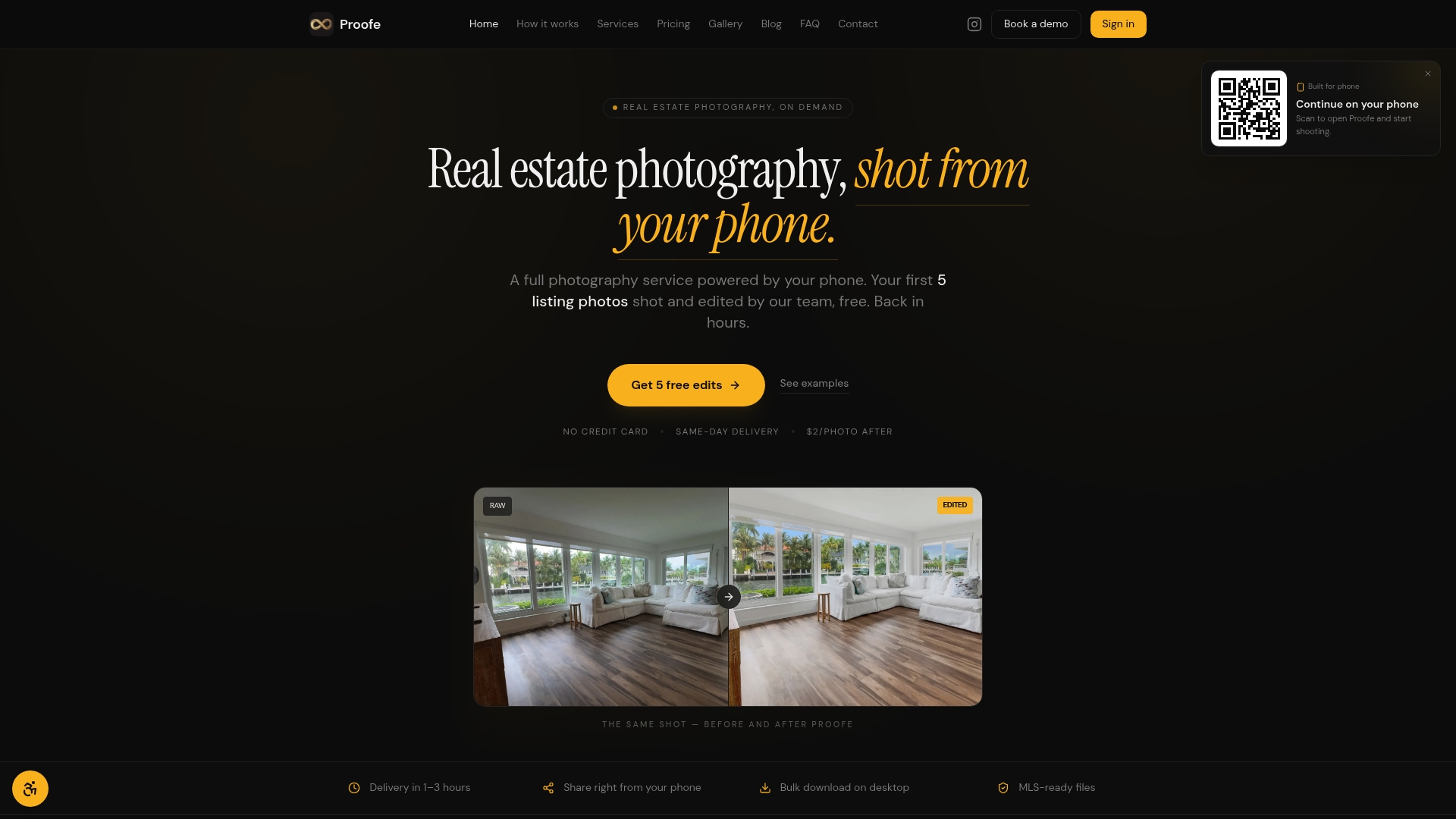
With Proofe's real estate photo app, you shoot the property, AI enhancement handles the rest, and you download professional-quality images the same day. Sky replacements, bright room edits, and HDR corrections are all built in. Your first five photos are free. For agents and property managers who need quality visuals fast, Proofe is the most direct path from your phone to a listing that gets clicks.
FAQ
What is real estate visual marketing?
Real estate visual marketing is the strategic use of photography, video, and graphic design to showcase properties and attract buyers online. It includes professional photos, AI virtual staging, walkthrough videos, and platform-specific content formats.
Why does visual content matter more than written descriptions?
Buyers decide within eight seconds whether to engage with a listing, and they retain 65% of visual information after three days compared to just 10% for text. Visuals communicate faster and stick longer than written descriptions.
What types of video work best for real estate listings?
Walkthrough videos work well for MLS and email marketing, while short vertical clips perform better on Instagram Reels and TikTok. Buyers who watch property videos are 85% more likely to schedule a showing than those who only view photos.
Can agents do their own visual marketing without a professional photographer?
Yes. Smartphone photography combined with AI photo enhancement tools like Proofe produces MLS-ready images without professional equipment. The key is following a planned shot list and applying AI corrections for lighting, color, and sky quality.
How does AI virtual staging help sell properties faster?
AI virtual staging digitally furnishes empty or dated rooms, helping buyers visualize how a space functions. This removes one of the biggest mental barriers buyers face when viewing vacant properties online.