
A real estate listing description is a focused marketing narrative that sells a home's lifestyle and unique features to attract buyers and motivate showings. Known in the industry as property copy or MLS remarks, it goes far beyond a list of specs. 97% of homebuyers use the internet during their home search, which makes your listing description the first real conversation you have with a potential buyer. A weak description gets skipped. A strong one gets a showing scheduled. Whether you are a homeowner selling your first property or an agent managing dozens of listings, knowing what to include and how to write it makes a measurable difference.
What is a real estate listing description?
A real estate listing description is the written section of an MLS or portal listing that explains why a buyer should care about a property. It is not a data dump of bedrooms and bathrooms. Those numbers already appear in the listing fields. The description is where you tell the story behind the numbers.
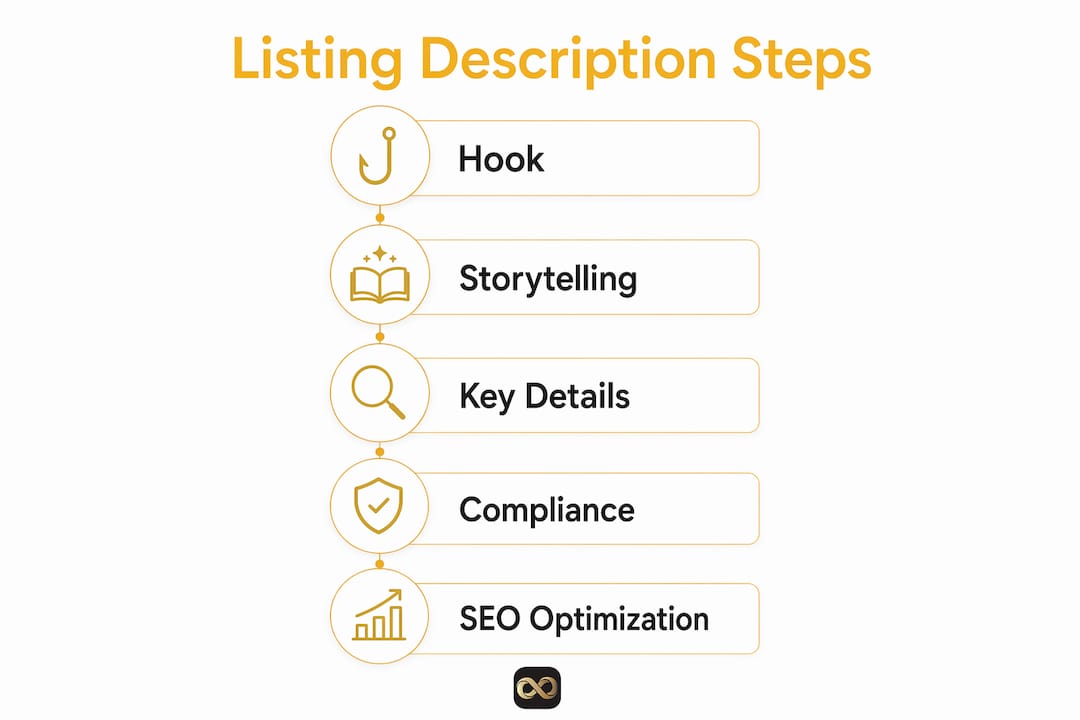
The best descriptions do three things at once. They hook the reader in the first sentence, paint a picture of life inside the home, and close with a clear next step. Writing for the buyer's lifestyle rather than just listing features creates an emotional connection that drives showings. That shift in perspective, from seller to buyer, is what separates average copy from copy that converts.

The real estate listing format on most MLS platforms allows thousands of characters. That does not mean you should use all of them. 150–200 words is the optimal length for buyer engagement. Buyers skim fast, and a wall of text signals effort, not value.
What key components make a listing description effective?
Every high-performing listing description shares the same core structure. Get these elements right and your copy will outperform most of what you see on the market.
- A strong opening hook. The first sentence must differentiate the property immediately. Generic openers like "Welcome to this beautiful home" waste the most valuable real estate in your copy. Lead with what makes this property unlike anything else on the block.
- Benefits over features. A feature is a gas fireplace. A benefit is "gather around a gas fireplace on cold winter evenings without hauling wood." Buyers buy feelings, not fixtures.
- Precise, verifiable details. Specific data like square footage, brand names of appliances, and dates of upgrades build buyer trust and set realistic expectations. "Updated kitchen" tells buyers nothing. "Kitchen renovated in 2023 with KitchenAid appliances and quartz countertops" tells them everything.
- Concise length. Aim for 150–200 words. Longer descriptions lose readers before they reach the call to action.
- A clear call to action. End with a direct invitation: "Schedule your private tour today" or "Call now before this one is gone."
- No filler language. Phrases like "must see," "cozy," and "charming" appear in thousands of listings. They add no information and train buyers to skim past your copy.
Pro Tip: Write your opening sentence last. Once you know every selling point in the description, you will find it much easier to craft the one line that captures the property's single best quality.
How do you write a story that connects with buyers?
Buyers do not buy homes. They buy the life they imagine living inside one. Your description needs to help them see that life clearly.
Start by picturing your ideal buyer. Is this a young family looking for a quiet neighborhood near top-rated schools? A remote worker who needs a dedicated home office? A couple who loves entertaining? Once you know who you are writing for, every sentence becomes easier to write.
Strong lifestyle writing uses sensory and emotional language without becoming purple prose. Compare these two approaches:
"The sun-filled breakfast nook overlooks a private backyard where weekend mornings feel like a retreat. The open layout means you can host a dinner party for twelve without rearranging furniture."
That kind of writing makes a buyer feel something. It answers the unspoken question every buyer carries: "Can I picture myself here?"
Here are the elements that make lifestyle writing work:
- Name the spaces and their purpose: "a dedicated home office," "a mudroom built for busy families"
- Use time of day as a framing device: "morning coffee on the wraparound porch," "evening sunsets from the master suite"
- Describe the neighborhood benefit, not just the address: "two blocks from Riverside Park," "walkable to downtown shops and restaurants"
- Let the layout tell a story: "the open floor plan connects the kitchen, dining, and living areas for effortless everyday living"
Balance story with facts. A description that reads like a novel but omits the year of the roof replacement leaves buyers with questions. Questions kill momentum. Pair every emotional beat with at least one concrete detail.
What are the legal and compliance considerations for listing descriptions?
Fair Housing Act compliance is not optional. The Fair Housing Act protects seven classes of buyers from discrimination: race, color, national origin, religion, sex, familial status, and disability. Descriptions that imply a preference for or against any of these groups expose you to legal action and license suspension.
The violations are often unintentional. Phrases that sound harmless can cross the line:
- "Perfect for a young professional" implies age and familial status preferences
- "Walking distance to church" implies a religious preference
- "Great for empty nesters" implies familial status
- "Quiet, family-friendly street" can imply a preference against single adults
Stick to describing the property, not the buyer. Write about the home's features, the neighborhood's amenities, and the lifestyle the space supports. You can say "near top-rated schools" because that describes a neighborhood fact, not a buyer type.
Peer review for Fair Housing compliance before publication reduces legal risk significantly. Many agents skip this step and pay for it later. Have a colleague or broker read your description specifically for discriminatory language before it goes live.
Pro Tip: Run your description through a Fair Housing checklist before publishing. Focus on any sentence that describes who might enjoy the home rather than what the home offers. Rewrite those sentences to describe the property itself.
Review your listing photo quality checklist alongside your description to make sure your visuals and copy tell the same compliant, compelling story.
How do SEO and AI indexing shape modern listing descriptions?
MLS platforms and real estate portals do not just display your listing. They rank it. AI search tools parse listing descriptions and favor specific, searchable terms to determine visibility. A description full of vague adjectives ranks lower than one packed with concrete, location-specific details.
Here is how to write for both human readers and machine indexing:
- Name the school district. "Located in the Naperville 203 school district" is searchable. "Near great schools" is not.
- Specify the neighborhood. "In the heart of Wicker Park" surfaces in neighborhood-specific searches. "Great location" does not.
- List upgrade keywords. Terms like "new roof 2024," "smart thermostat," and "EV charger" appear in filtered searches on major portals.
- Name the style. "Mid-century modern," "craftsman bungalow," and "farmhouse" are search terms buyers actually use.
- Include proximity details. "Five minutes from O'Hare" or "walkable to the Metra station" answers commuter searches directly.
The table below shows the difference between vague and searchable language:
| Vague phrase | Searchable alternative |
|---|---|
| Great location | Walkable to Lincoln Square shops and restaurants |
| Updated kitchen | Kitchen remodeled 2023, quartz countertops, gas range |
| Nice yard | Fully fenced backyard with mature oak trees |
| Good schools | Evanston Township High School district |
| Modern finishes | Wide-plank white oak floors, Restoration Hardware fixtures |
Balancing SEO with readability means weaving these terms into natural sentences rather than stacking them in a keyword list. A sentence like "This craftsman bungalow sits two blocks from the Ravenswood Metra stop in the Lincoln Square neighborhood" does both jobs at once.
Key Takeaways
A compelling real estate listing description combines a strong hook, buyer-focused storytelling, precise facts, Fair Housing compliance, and searchable language to drive showings and build buyer trust.
| Point | Details |
|---|---|
| Optimal length is 150–200 words | Longer descriptions lose buyers to scroll fatigue before they reach the call to action. |
| Lead with a differentiated hook | The first sentence must name what makes the property unique or buyers will skip the rest. |
| Write benefits, not features | Describe the life the home enables, then back it up with specific, verifiable details. |
| Fair Housing compliance is non-negotiable | Peer review every description for language that implies buyer preferences before publishing. |
| Use searchable, specific terms | Name school districts, neighborhoods, and upgrades so AI tools and portals surface your listing. |
Why the opening line is the only line that matters first
I have reviewed hundreds of listing descriptions over the years, and the pattern is always the same. The agents who struggle with showings write for themselves. The agents who consistently book tours write for the buyer standing in front of a screen at 10 p.m., scrolling through thirty listings that all look the same.
The opening line is where listings are won or lost. I have seen a single rewritten first sentence increase showing requests on a stale listing within a week. Not because the home changed, but because the copy finally told buyers what made it worth their Saturday afternoon. Most agents write the hook last, if they write it at all. Treat it as the most important sentence in the document and write it first, then revise everything else to support it.
The other mistake I see constantly is treating compliance as a separate checklist item. Fair Housing language should be baked into how you think about writing, not bolted on at the end. If you catch yourself writing about who would love this home, stop and rewrite to describe what the home offers instead. That shift protects you legally and actually produces better copy.
Finally, do not underestimate how much AI indexing has changed the game. Descriptions written in 2020 with vague lifestyle language now rank below listings that name the school district, the neighborhood, and the year of every major upgrade. Specificity is no longer just good writing. It is a ranking signal.
— Richard Lopez
How Proofe makes your listing photos match your copy
Strong copy and weak photos cancel each other out. Buyers read a great description and click through to blurry, dark images, and the showing never gets booked.
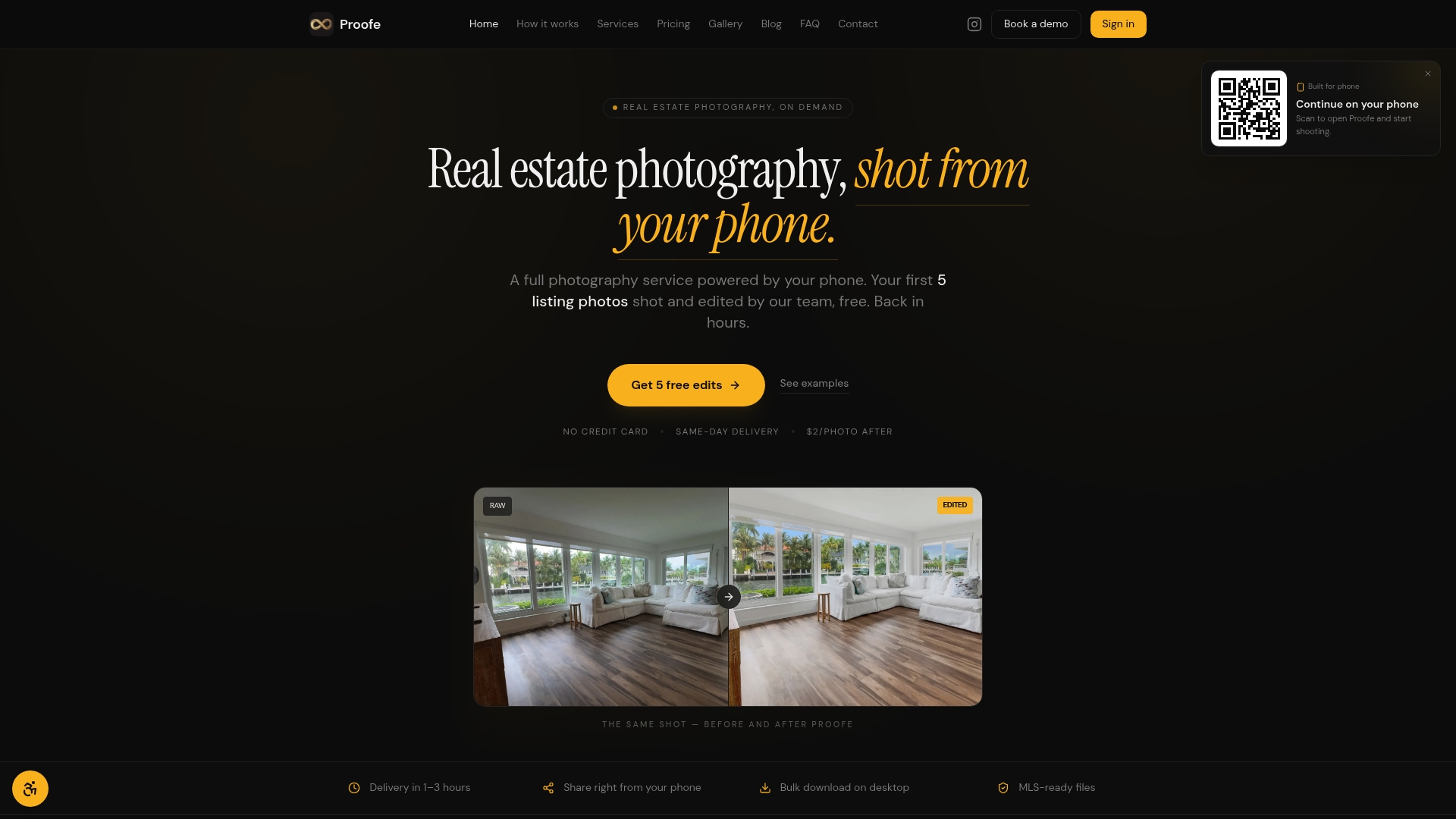
Proofe solves the photo side of that equation directly from your smartphone. Shoot your listing photos, run them through AI enhancement, and download MLS-ready files the same day. No expensive equipment, no waiting on a photographer's schedule. Proofe's AI photo enhancer corrects lighting, sharpens detail, and delivers images that match the quality of your written copy. The first five photos are free, so you can see the results before committing. Airbnb hosts updating their listings between seasons get the same benefit: fresh, polished photos that reflect the property at its best and help drive more bookings year-round.
FAQ
What is a real estate listing description?
A real estate listing description is the written marketing narrative in an MLS or portal listing that highlights a property's features, lifestyle benefits, and unique selling points to attract buyers and motivate showings.
How long should a listing description be?
150–200 words is the optimal length. Longer descriptions reduce engagement because buyers skim quickly and lose interest before reaching the call to action.
What should I include in a listing description?
Include a strong opening hook, lifestyle benefits, precise details like square footage and upgrade dates, neighborhood and school district information, and a clear call to action at the end.
What phrases should I avoid for Fair Housing compliance?
Avoid any language that implies a preference for or against a buyer based on race, color, national origin, religion, sex, familial status, or disability. Phrases like "perfect for young professionals" or "great for families" can violate the Fair Housing Act.
How do I make my listing description rank higher on real estate portals?
Use specific, searchable terms like the school district name, neighborhood, upgrade years, and home style. AI search tools favor concrete details over vague adjectives, so specificity directly improves your listing's visibility.