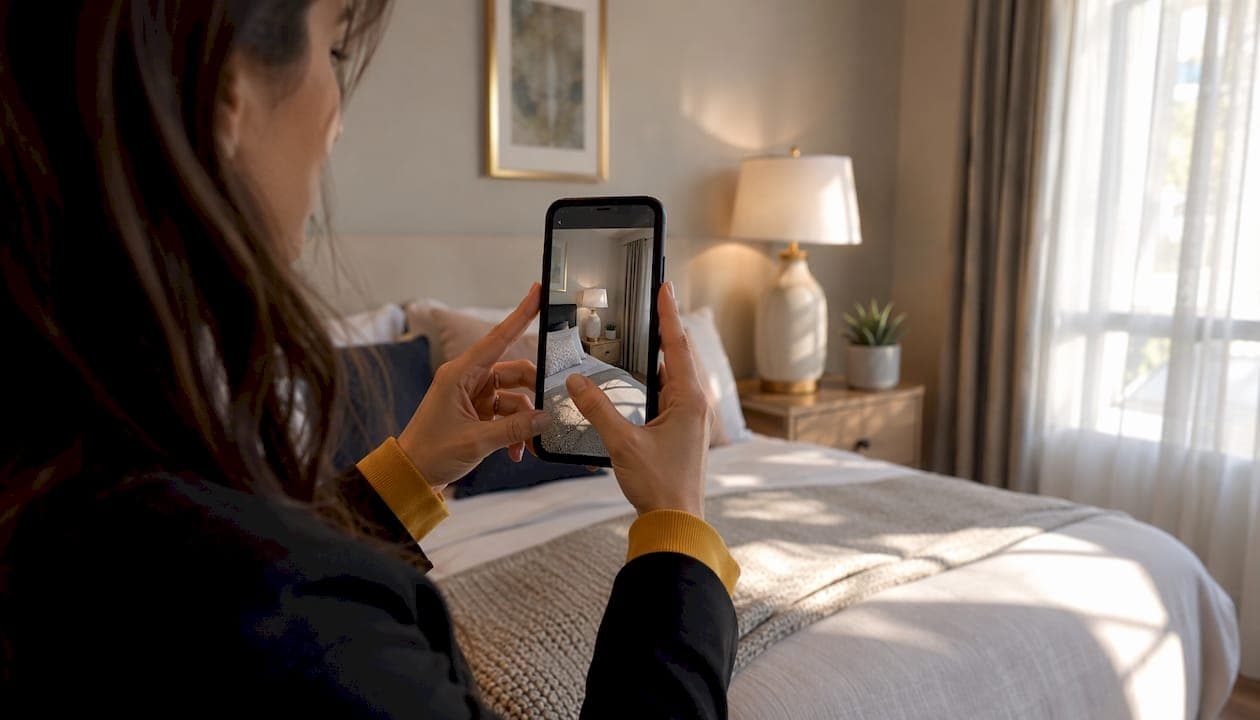
High-quality listing photos are the single biggest driver of open-house attendance. When a buyer scrolls through portal results, a compelling image stops the scroll, triggers an emotional response, and creates a mental connection to the space — all before they read a single word of the description. Vision occupies roughly 70% of the body's sensory receptors, and visual memory is encoded in the same brain region that processes emotion. That biology is why photos don't just inform buyers — they motivate them to show up.
Three visual elements consistently drive open-house turnout:
- A compelling hero image — the lead photo that appears in search-grid thumbnails and determines whether a buyer clicks at all
- Staged key-room interior shots — living room, primary bedroom, and kitchen that let buyers mentally place themselves in the home
- A clear exterior/curb appeal photo — the image that confirms the property matches expectations and builds confidence to visit
Table of Contents
- Why do open house photos attract visitors? The psychology behind it
- Which photos actually get people to show up?
- What AI-enhanced photos actually change for your listings
- A practical shoot checklist for your next open house
- How to turn your listing photos into open-house visitors
- How do you measure whether photos are driving attendance?
- How Proofe helps agents get more open-house visitors
- Virtual staging vs. real photos: which style converts better?
- When should you release listing photos for maximum impact?
- Key Takeaways
- The photo gap most agents still haven't closed
- Get your next listing photos done today
- Research sources and further reading
Why do open house photos attract visitors? The psychology behind it
Images capture attention faster than text and hold it longer. Eye-tracking research shows buyers spend a disproportionate share of their listing-view time on photos, not descriptions. More importantly, visual content improves retention and engagement compared with text-only approaches — which is why the photo is doing the persuasion work, not the copy.
The deeper mechanism is mental ownership. When a buyer sees a well-staged living room, they don't just evaluate it — they start imagining their couch in the corner. That mental placement creates emotional pre-commitment. By the time they close the tab, they've already half-decided to attend.
High-fidelity listing images do more than inform — they create anticipation that turns passive scrollers into active visitors.
The first 72 hours after a listing goes live drive a disproportionate share of total portal views. The lead photo (the thumbnail buyers see in search results) is the gatekeeper. A weak thumbnail loses the click before the buyer ever sees the rest of the gallery.
Which photos actually get people to show up?
Listings with professional photos receive substantially more views-576-584) — over 61% on some metrics — along with large increases in social media shares and saved listings. The photo type matters as much as the quality.
Here's the priority order for open-house conversion:
- Hero/lead image: Interior living space for most homes; exterior for properties with exceptional curb appeal or land. This is your thumbnail — it has to earn the click.
- Exterior/curb appeal: Confirms the property is real and matches expectations. Buyers who skip this feel uncertain.
- Primary living space: Wide-angle, eye-level, natural light. This is where mental ownership happens.
- Primary bedroom: Buyers rank this second only to the living room for emotional weight.
- Kitchen: Finishes and layout matter. Show counter space and natural light.
- Flow/layout shots: A room-to-room sequence that helps buyers understand how the home lives.
- Lifestyle/detail shots: Outdoor living, fireplace, built-ins — the details that make a home feel specific and desirable.
Eye-tracking and experiment-based research shows that overly aspirational or heavily edited images can register as ads in the first three seconds, causing buyers to scroll past. The goal is professional but livable.
Pro Tip: Stage for the camera, not the room. Remove personal items, add one or two intentional props (a plant, a throw), and shoot at eye level — not from a corner with a fisheye lens. Buyers should feel like they're standing in the home, not looking at a render.
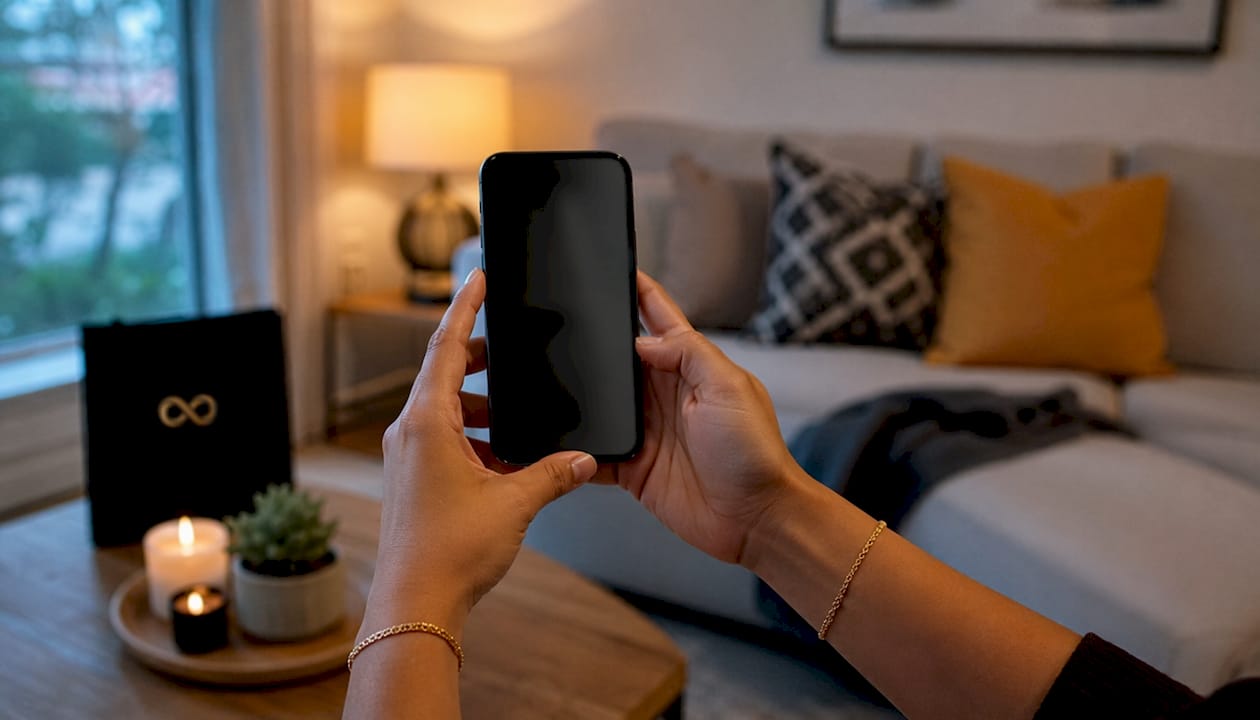
What AI-enhanced photos actually change for your listings
AI enhancements improve clarity, lighting consistency, virtual staging, and composition — which raises click-through rates and pre-qualifies higher-intent visitors before they walk through the door.
Open-house photos serve as pre-qualification: buyers who interact with AI-staged imagery mentally place furniture and feel ownership, which produces higher-quality foot traffic and more sale-ready conversations at the open house.
The before-to-after impact is concrete:
| Enhancement | Before AI | After AI |
|---|---|---|
| Lighting correction | Uneven exposure, dark corners | Balanced, natural-looking light |
| Virtual staging | Empty rooms that feel cold | Furnished, lifestyle-ready spaces |
| Object removal | Clutter visible in shots | Clean, distraction-free frames |
| MLS-ready delivery | Hours of editing or outsourcing | Same-day, portal-ready files |
AI staging creates photorealistic furnished images from empty-room photos in hours, enabling staged listings at launch and A/B testing of styles. That speed matters because agents who publish staged photos at listing launch capture the algorithmic visibility window before it closes.
On ethics: always disclose virtual staging in your listing description. A buyer who arrives expecting a furnished home and finds an empty one loses trust immediately. Disclosure is a one-line note — it doesn't hurt conversion, and it protects you.
Pro Tip: Run a simple A/B test. Publish your AI-staged hero image for 72 hours, then swap to a different room or style. Compare portal CTR and saves. Two data points are enough to know which image pulls harder.
A practical shoot checklist for your next open house
Follow this before you upload anything to the MLS:
- Timing: Shoot during golden hour (one hour after sunrise or before sunset) for warm, natural light. Midday creates harsh shadows.
- Declutter first: Remove personal photos, excess furniture, and anything on countertops. Less is more.
- Phone settings: Enable HDR, lock exposure manually on the brightest part of the frame, and shoot in the highest resolution available.
- Stabilize: Use a tripod or prop your phone on a stable surface. Blurry photos lose clicks immediately.
- Perspective correction: Shoot from chest height, not eye level. Keep vertical lines straight — fix distortion in editing.
- Flow shot: Capture at least one image from a doorway showing two connected rooms. This helps buyers understand the layout.
- Exterior: Shoot from the street, slightly angled. Include the driveway and any landscaping. Exterior shots set expectations and reduce no-shows.
Agents who promote 7–10 days out and use short listing videos see more pre-event inquiries. Photos remain the header images that feed email, social, and portal creatives — video amplifies them, but photos are the foundation.
Pro Tip: Match color temperature across all shots. If your kitchen looks warm and your bedroom looks cool, buyers notice the inconsistency. Shoot at the same time of day or correct white balance in editing.
One ethics note: avoid removing structural features or adding views that don't exist. Virtual staging of furniture is standard practice — altering the property itself is misrepresentation.
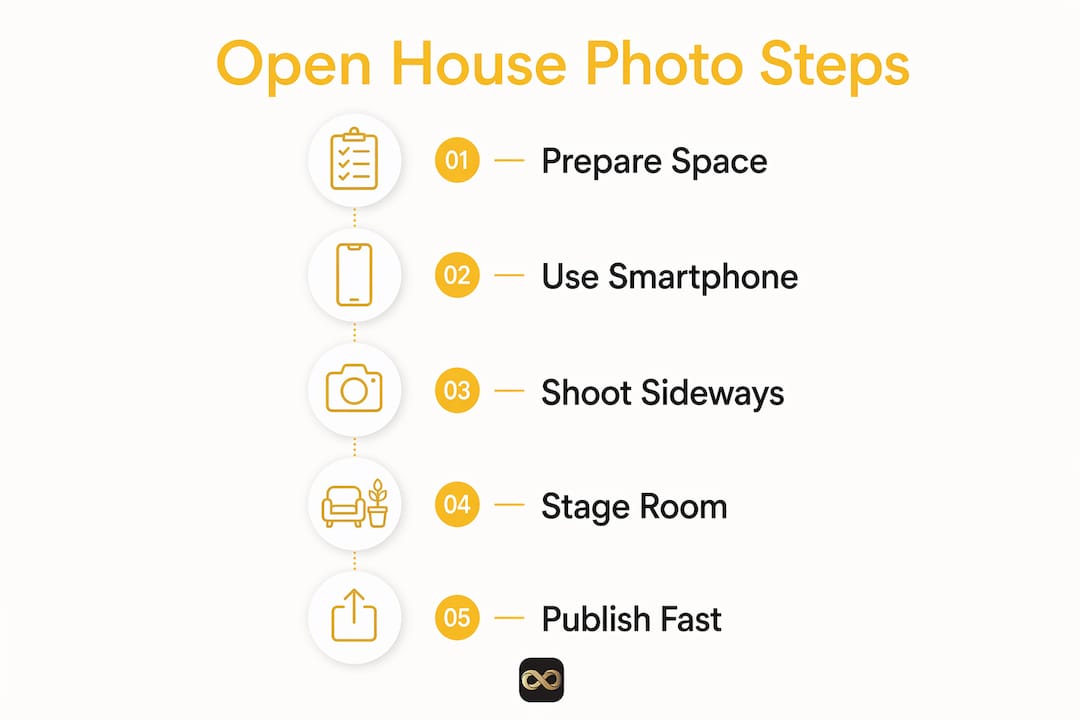
How to turn your listing photos into open-house visitors
Photos are the creative asset. Every channel should use the same high-performing hero image to build recall across touchpoints.
- MLS thumbnail: Your hero image is the grid thumbnail. Optimize it first — this is where the click happens or doesn't.
- Instagram Reels/Stories: Use 3–5 staged images in a short slideshow. Add the open-house date and address in text overlay.
- Facebook Events: Create an event with the full gallery attached. Buyers who save the event get automatic reminders.
- Email header: Use the hero image as the email banner. Keep the subject line short and include the open-house date.
- SMS reminders: Send an image + date + RSVP link 3 days out and again 24 hours before.
- Paid ads: Run the lead photo as a single-image ad targeting buyers in your zip code. Short caption, open-house date, and a link to the listing.
Understanding how real estate portals surface new listings helps you time your photo release to hit the algorithmic peak. Publish staged photos at listing launch — not two days later. The first 24–72 hours are when portal algorithms push new listings to the top of search results.
How do you measure whether photos are driving attendance?
Track these five metrics for every listing:
- Portal CTR — the percentage of searchers who click your listing from the grid. Your MLS or portal dashboard shows this. A meaningful lift is 10–20% above your baseline.
- Listing saves — buyers who save a listing are signaling intent. Watch for a spike in the first 72 hours.
- Direct messages and inquiries — count inbound questions about the property within 48 hours of going live.
- Showing requests — how many requests come in before the open house? More requests = stronger photo performance.
- Open-house attendance — the final count. Track it against your previous listings to build a baseline.
| Metric | Where to find it | Target lift |
|---|---|---|
| Portal CTR | MLS/portal dashboard | 10–20% above baseline |
| Listing saves | Portal analytics | Substantial increase in first 72 hours |
| Inquiries (48 hrs) | CRM or inbox | More than previous listing |
| Showing requests | Showing service | More than previous listing |
| Open-house attendance | Door count | Higher than comparable listing |
For your A/B test: swap the hero image (real vs. AI-staged) after 72 hours, hold all copy constant, and compare CTR and saves. Two data points per listing build a reliable picture over time.
How Proofe helps agents get more open-house visitors
Proofe turns smartphone shots into MLS-ready, AI-enhanced photos the same day — so you publish high-converting images before the algorithmic peak closes.
- Same-day delivery: Shoot in the morning, upload to the MLS by afternoon. No waiting on a photographer's schedule.
- MLS-ready files: Correct aspect ratios, resolution, and file sizes — ready to upload without extra steps.
- Virtual staging: Transform empty rooms into furnished, lifestyle-ready spaces for a fraction of physical staging costs.
- Style A/B testing: Generate multiple staging styles quickly and test which hero image pulls more clicks.
- First five photos free: Try the service on your next listing with no upfront commitment.
In 2026, top-performing agents treat visuals as the primary strategy: AI staging and short listing video are integrated with the photo-first MLS upload to capture the early-algorithm window and increase open-house attendance.
Airbnb hosts and short-term rental managers benefit from the same workflow. Seasonal photo refreshes — new images for spring, fall, or holiday setups — directly impact booking rates. Property managers can use Proofe to retake and enhance photos at each season change without hiring a photographer.
Virtual staging vs. real photos: which style converts better?
The honest answer: it depends on the property and the buyer pool, but the gap is narrowing fast.
Physical staging produces photos that feel undeniably real — buyers can see actual furniture, actual light, actual texture. The downside is cost (physical staging runs into thousands of dollars for a full home) and time. You can't stage and shoot the same day you list.
AI virtual staging closes that gap. The images are photorealistic, delivered the same day, and cost a fraction of physical staging. The trade-off is disclosure: you must note that images are virtually staged, and buyers will arrive to an empty space. That's manageable — most buyers understand the convention.
NAR surveys report that a large majority of buyers say staging helps them visualize a property, whether physical or virtual. The visualization benefit is the same. For vacant properties, AI staging is the practical choice. For occupied homes, real photos with light AI correction (lighting, object removal, color balance) tend to feel more authentic and avoid the "looks like an ad" hesitation.
The best approach for most agents: use AI-enhanced real photos as the default, and add virtual staging only for vacant rooms or properties that photograph poorly unfurnished.
When should you release listing photos for maximum impact?
Publish your full photo gallery at the moment the listing goes live. Not the next day. Not after the first showing. At launch.
The first 72 hours after a listing goes live drive a disproportionate share of total portal views. Algorithms on Zillow, Realtor.com, and similar portals push new listings to the top of search results during this window. A listing that launches with placeholder photos or a single exterior shot loses that momentum permanently.
For open-house promotion specifically, treat it as a week-long campaign. Release the full gallery at listing launch. Post a teaser Reel or Story 5–7 days before the open house. Send an email with the hero image 3 days out. Follow up with an SMS reminder 24 hours before. Each touchpoint uses the same hero image — consistency builds recall.
For Airbnb and short-term rental hosts, the same logic applies seasonally. Refresh your photos at the start of each season to signal to the platform's algorithm that your listing is active and current. New photos trigger a visibility boost similar to a new listing launch.
Key Takeaways
High-quality, AI-enhanced listing photos published at launch are the most reliable way to increase open-house attendance — every other tactic amplifies what the photos start.
| Point | Details |
|---|---|
| Publish at launch | Release your full photo gallery the moment the listing goes live to capture the first 72-hour algorithmic window. |
| Hero image first | Your lead photo determines portal CTR — optimize it before anything else in the gallery. |
| AI staging for vacant rooms | Virtual staging delivers photorealistic furnished images same-day at a fraction of physical staging cost; always disclose. |
| Measure CTR and saves | Track portal click-through rate and listing saves in the first 72 hours to quantify photo impact. |
| Proofe for same-day delivery | Proofe turns smartphone shots into MLS-ready, AI-enhanced photos the same day — including virtual staging and free first five photos. |
The photo gap most agents still haven't closed
Most agents understand that photos matter. Fewer understand when they matter most — and that timing gap is where open-house attendance is won or lost.
The algorithmic window is real and unforgiving. A listing that launches with weak photos and upgrades them three days later has already missed the peak. The buyers who would have clicked, saved, and RSVPed have moved on to the next new listing. This isn't a theory — it's how portal algorithms work, and it's why the shoot-enhance-publish sequence has to happen before the listing goes live, not after.
The other thing agents underestimate is the pre-qualification effect of good imagery. Buyers who engage deeply with a well-staged gallery arrive at the open house with questions about the property, not questions about whether they want to be there. That changes the quality of every conversation you have at the door. Fewer tire-kickers, more serious buyers — and that ratio matters more than raw attendance numbers.
The tools to close this gap exist right now. The agents using them are the ones filling open houses.
Get your next listing photos done today
Shooting a listing tomorrow? Proofe gives you MLS-ready photos from your smartphone — AI-enhanced, same-day, with your first five photos free. No photographer to schedule, no waiting days for edits.
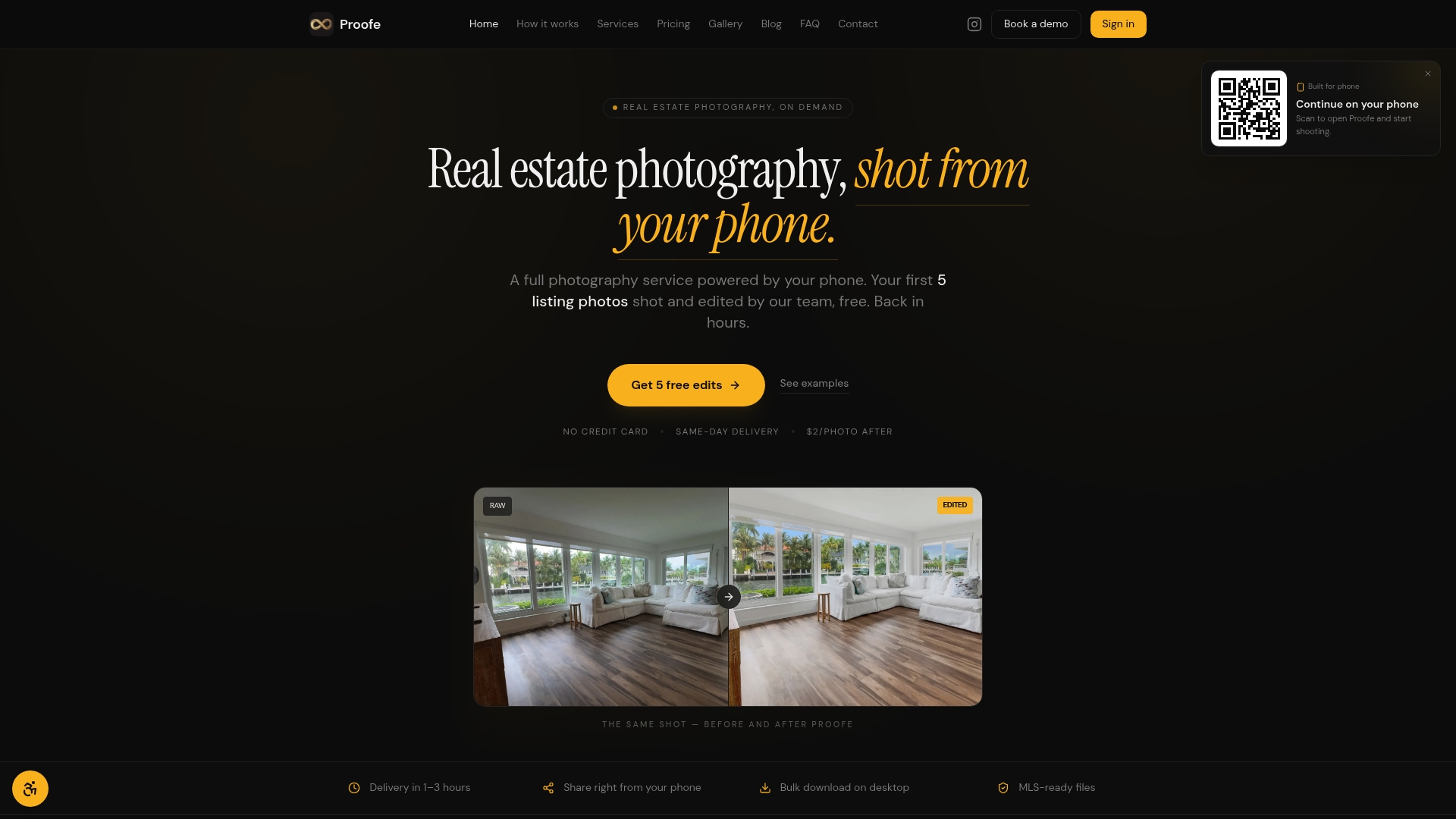
Upload your shots, let Proofe's AI handle the lighting correction, virtual staging, and portal-ready formatting, then publish before the 72-hour window closes. It's the fastest way to go from shoot to live listing without cutting corners on quality. Start with your first five photos free and see the difference before your next open house.
Research sources and further reading
- Effects of Real Estate Brokers' Marketing Strategies: MLS Photographs and Open Houses — academic study on how MLS photos and open houses affect price and time-on-market
- Listing Agent Signals: Does a Picture Paint a Thousand Words? — research on how images and words influence buyers' decisions to visit a property
- The impact of visual aspects of real estate on buyer decision-making-576-584) — analysis of photography as a marketing tool, including engagement lift data
- NAR 2024 Profile of Home Buyers and Sellers — industry benchmark data on staging and buyer behavior
- Open House Traffic in 2026: How AI Virtual Staging Turns Online Listings into In-Person Showings — practical guide to AI staging and the 72-hour algorithmic window
- The essential guide to visual content marketing — vision science and emotional encoding behind visual marketing
- How to sell your home faster: the photo decision that determines whether buyers click or scroll — experiment-based research on over-edited images and buyer hesitation
- Open House Marketing: The Complete Playbook for Agents — timing and channel tactics for open-house promotion campaigns
- Visual marketing strategy that converts — multi-channel visual content strategy and engagement data
- Working paper on disclosure timing and market effects — research on limiting vs. releasing photos at launch and market impact