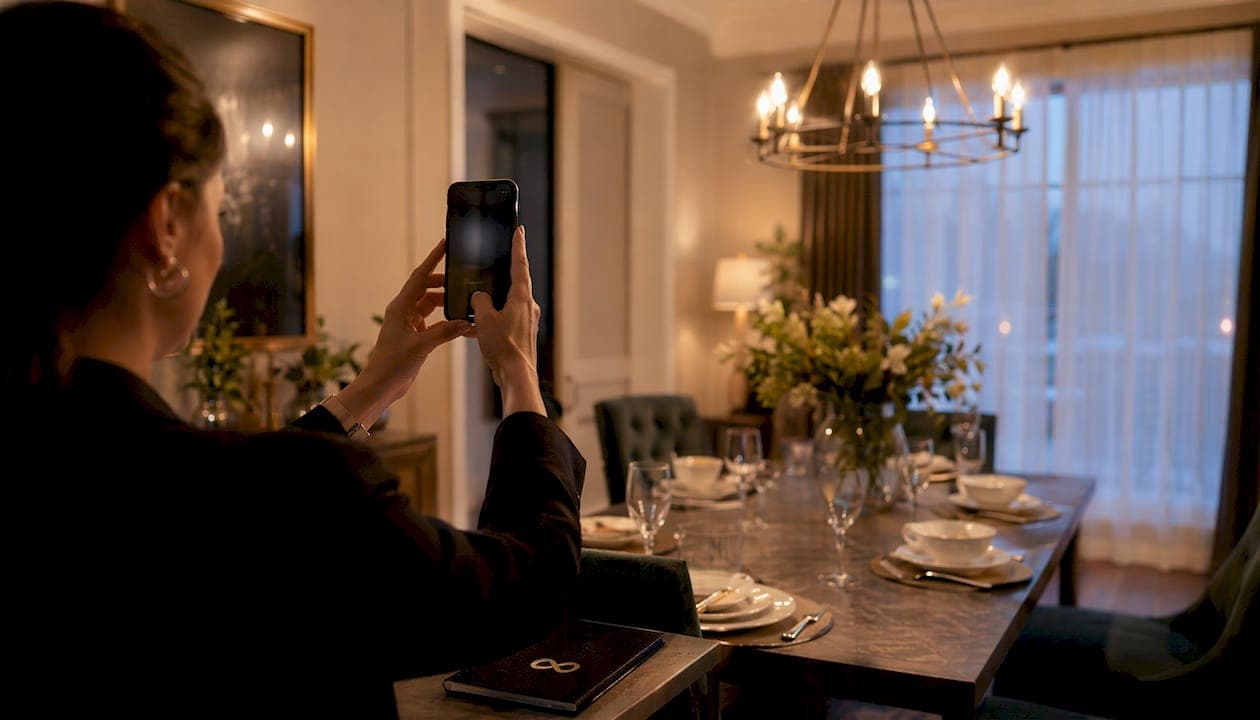
Affordable property photography options compared side by side reveal one clear truth: the cheapest option rarely delivers the best return. Real estate listing photography, the industry term for professionally prepared property images used in MLS submissions and marketing, now spans a wide range of price points. AI editing tools start as low as $0.05 per image, virtual staging runs from $0.23 to $49 per photo, and traditional photographers charge anywhere from $100 to $1,200 or more per shoot. Virtually staged listings receive 90% more clicks and sell 73% faster than non-staged ones. That data alone reframes the entire cost conversation.
1. What are the main categories of affordable property photography?
Four distinct categories cover the full range of budget listing photo solutions. Each serves a different combination of volume, skill level, and quality expectation.
- DIY smartphone photography: Shoot with your phone using affordable accessories. Works best for low-budget listings or Airbnb rentals where speed matters more than perfection.
- AI-powered photo editing services: Upload raw photos and receive enhanced, MLS-ready files. Pricing models split between pay-per-photo and monthly subscriptions.
- Budget traditional photographers: Hire a local photographer at the lower end of the market. Expect to pay $100–$300 for a basic residential shoot with standard turnaround.
- Virtual staging services: Replace empty rooms with furnished digital interiors. Costs run from $0.23 per image on budget AI platforms to $49 per image for premium 3D rendering.
The right category depends on your listing volume, available time, and how much editing skill you bring to the table. A property manager handling 50 units per year has very different needs than a homeowner selling once. Understanding photo delivery options for each category helps you match the service to the job.
2. How do AI-powered photo editing tools compare in affordability?
AI editing tools cut editing time from hours to minutes while keeping quality consistent across listings. Imagen AI processes 1,500 photos per hour using a model that learns a photographer's personal style. That speed matters when you have back-to-back listing deadlines.
Pricing splits into two main models. AutoHDR charges $0.50–$1.50 per image with no subscription required, making it a clean pay-as-you-go option. Imagen AI uses a subscription at roughly $29 per month plus per-photo fees, and it requires Lightroom integration. AutoHDR suits agents who want finished JPEGs fast without managing a Lightroom catalog.
Agents with 30 or more listings yearly benefit from subscription models, while pay-per-photo pricing reduces overhead for occasional sellers. The math is straightforward: if you shoot fewer than three listings per month, a subscription rarely breaks even. Budget AI editing on platforms like AutoEnhance.ai starts at $0.39 per image with no subscription, which makes it one of the most accessible entry points for homeowners and new agents.
Pro Tip: Choose your AI editing tool based on whether you already use Lightroom. If you do, a subscription model with style matching pays off quickly. If you don't, a simple pay-per-photo service keeps your workflow clean and your costs predictable.
Hybrid workflows also work well. AutoHDR handles rush JPEG delivery while Imagen AI manages style-consistent edits for standard listings. Running both tools in parallel gives you speed and quality control without locking into a single vendor.
3. What are affordable virtual staging options and how do they compare?
Virtual staging is the highest-ROI line item in listing marketing for vacant properties. Physical staging costs $4,000–$8,000 for a multi-room project. Virtual staging delivers the same visual impact for a fraction of that price.
Budget AI virtual staging platforms start at $0.23 per image. Premium 3D rendering services charge up to $49 per image for photorealistic results with custom furniture selections. Most agents land somewhere in the $15–$25 per image range for quality that holds up in MLS photos and online listings. Proofe's virtual staging service sits in this practical middle range, with fast turnaround and MLS-ready output.
The tradeoffs between budget and premium virtual staging come down to three factors:
- Realism: Premium services use custom 3D models. Budget AI tools use preset furniture libraries that may look generic.
- Turnaround: Budget platforms often deliver same-day. Premium services may take 24–72 hours.
- Creative control: Higher-priced services let you specify furniture style, color palette, and room layout. Budget tools offer limited customization.
Agents who stage effectively sell closer to asking price with higher online visibility. For Airbnb hosts, virtual staging before seasonal photo refreshes can lift booking rates without the cost of renting physical furniture. The AI home search shift means buyers now filter listings visually before ever contacting an agent, making staged photos a baseline expectation rather than a premium add-on.
4. What practical DIY approaches work for budget property photography?
DIY listing photography works when you combine the right tools with a disciplined process. A smartphone with a wide-angle lens attachment, a sturdy tripod, and a portable LED light panel covers the core equipment needs for under $150 total.

The editing step separates acceptable DIY photos from professional-looking ones. Free tools like Snapseed handle brightness and perspective correction. Paid apps with AI enhancement, including Proofe's AI photo enhancer, take raw smartphone shots and deliver polished, MLS-ready files without requiring any editing skill. That combination, shoot yourself and enhance with AI, is the most cost-effective approach available in 2026.
DIY photography has real limits. Poorly lit rooms, lens distortion, and inconsistent white balance are common problems that require editing time to fix. Automated AI services handle basic corrections well, but expert oversight prevents inconsistent results across a full listing portfolio. If your brand depends on consistent quality across every listing, pure DIY carries risk.
Pro Tip: Shoot in natural light between 10 AM and 2 PM when sunlight is even and shadows are minimal. Combine those shots with AI editing for results that rival photos taken with professional camera equipment.
5. How does traditional photography fit into a budget strategy?
Traditional real estate photographers charge $100–$300 for a standard residential shoot at the budget end of the market. That price typically includes 20–40 edited photos with a 24–48 hour turnaround. Premium photographers with drone capability, twilight shots, and video walkthroughs push costs to $500–$1,200 or more.
The case for hiring a photographer comes down to property value. A $150 photography fee on a $600,000 listing represents a tiny fraction of the commission. On a $150,000 rental property, that same fee deserves more scrutiny. Match your photography investment to the expected return, not to a fixed budget number.
Human-edited photos at $1.50 or more per image deliver reliable brand quality that fully automated AI services may not match across varied listing portfolios. Agents who have experienced a rushed listing with inconsistent AI edits understand why a vetted photographer relationship has real value. The hidden cost of bad photos is lost buyer interest, not just the editing fee.
6. How to choose the best affordable listing photo service for your needs
The right service matches your listing volume, not just your budget. Identifying your bottleneck first, whether that is editing, curation, or staging, prevents paying for features you will never use.
Use this framework to narrow your options:
| Your situation | Best approach |
|---|---|
| Fewer than 5 listings per year | Pay-per-photo AI editing or DIY with AI enhancement |
| 5–30 listings per year | Pay-per-photo AI editing plus virtual staging as needed |
| 30+ listings per year | Subscription AI editing with Lightroom integration |
| Vacant property needing visual appeal | Virtual staging at $15–$25 per image |
| Airbnb seasonal refresh | DIY smartphone photos plus AI enhancement |
Workflow integration with tools you already use, like Lightroom, often delivers more value than a lower per-photo price. A service that fits your existing process saves time on every listing. Time is a cost that most property photography comparisons ignore entirely. Learning how to edit real estate photos efficiently also reduces your dependence on any single vendor.
Key takeaways
The most cost-effective property photography strategy combines the right pricing model with the right workflow, not simply the lowest per-photo price.
| Point | Details |
|---|---|
| Virtual staging delivers strong ROI | Virtually staged listings sell 73% faster and get 90% more clicks than non-staged ones. |
| Match pricing model to listing volume | Subscriptions pay off at 30+ listings per year; pay-per-photo suits occasional sellers. |
| DIY plus AI editing cuts costs sharply | Smartphone photos combined with AI enhancement produce MLS-ready results for minimal spend. |
| Hidden costs matter | Poor-quality photos cost buyer interest, not just editing fees. |
| Workflow fit beats lowest price | A service that integrates with your existing process saves time on every single listing. |
What I've learned from watching agents pick the wrong photography service
The most common mistake I see is agents choosing a service based on the lowest per-image price and then spending hours fixing inconsistent results before a listing goes live. That time cost never shows up in the original comparison. A $0.39 per image edit that requires three rounds of corrections is not cheaper than a $1.50 edit that ships correctly the first time.
The second mistake is subscribing to an AI editing platform before testing it on your actual listing photos. Every service performs differently depending on your camera, your lighting conditions, and your style preferences. Most platforms offer a free trial or a small paid batch. Use it on your worst-case photos, the dim rooms and the awkward angles, before committing to a monthly fee.
Virtual staging is the area where I see the biggest gap between expectation and reality at the budget end. The $0.23 per image options exist, but the furniture libraries are limited and the results often look obviously digital. For a listing where staging matters, spending $15–$25 per image is the practical floor for results that hold up under buyer scrutiny.
The agents I see getting the best results treat photography as a workflow problem, not a cost problem. They pick one editing vendor, one staging vendor, and one delivery process, then they repeat it on every listing. Consistency builds a recognizable brand. Chasing the cheapest option every time produces inconsistent results that undermine that brand over time.
— Richard Lopez
Proofe makes budget listing photography straightforward
Getting professional listing photos no longer requires booking a photographer days in advance or renting expensive equipment.
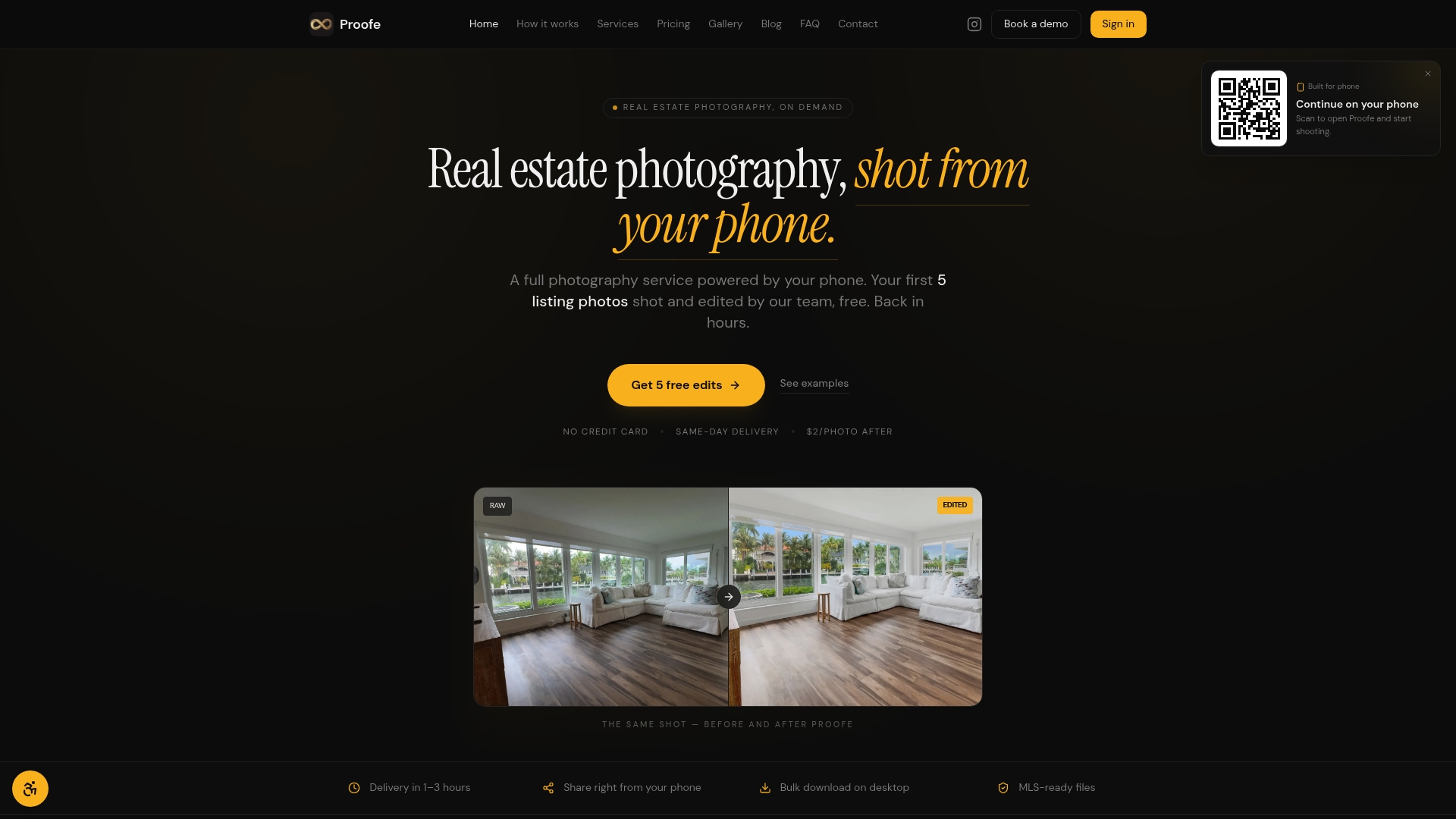
Proofe lets you shoot listing photos directly from your smartphone, then uses AI to enhance them into MLS-ready files, all with same-day delivery. The first five photos are free, so you can test the full workflow on a real listing before spending anything. Agents, property managers, and Airbnb hosts use Proofe to refresh listing photos quickly, especially at seasonal changeovers when updated images can lift bookings and buyer interest. Start with Proofe and see what your listings look like with professional-quality photos taken from your phone.
FAQ
What is the cheapest way to get listing photos?
DIY smartphone photography combined with AI editing is the most affordable approach, with AI enhancement available from as low as $0.39 per image on pay-per-photo platforms.
How much does virtual staging cost compared to physical staging?
Virtual staging runs from $0.23 to $49 per image depending on quality tier. Physical staging for multiple rooms costs $4,000–$8,000, making virtual staging the clear budget choice.
When does a subscription AI editing plan make sense?
Subscription plans make financial sense for agents handling 30 or more listings per year. Below that volume, pay-per-photo pricing keeps costs lower and avoids unused monthly minimums.
Do virtually staged listings actually sell faster?
Virtually staged listings sell 73% faster and receive 90% more clicks than non-staged listings, making staging one of the highest-return investments in listing marketing.
Can Airbnb hosts benefit from affordable property photography?
Airbnb hosts benefit significantly from refreshed listing photos, particularly at seasonal transitions. Smartphone photos enhanced with AI editing deliver updated, appealing images quickly and at low cost.