The best types of property photos for vacancies are professional-quality images that cover every key interior and exterior space, supported by modern formats like virtual tours and drone shots. Listings with professional photos lease 32% faster and generate 118% more clicks and engagement. That gap in performance comes down to one thing: the right photo types, shot well, in the right order. This guide breaks down every category of vacancy property photography you need, how many images to include, and how to get professional results without a professional budget.
1. What are the essential interior photo types for rental vacancies?
Interior photos are the foundation of any rental listing. They answer the question every prospective tenant asks first: "What does it actually look like inside?"
The interior shot list for a standard vacancy includes:
- Hero shot: The living room or kitchen, whichever photographs best. This is your first image and your strongest first impression.
- Living room: Show the full space with a wide-angle lens. Include windows to communicate natural light.
- Kitchen: Capture counter space, appliances, and storage. Tenants rank kitchen quality among their top filters.
- Primary bedroom: Shoot from the doorway to show the full room. Include closet space if it is a selling point.
- Additional bedrooms: Even small rooms deserve a photo. Skipping them raises questions.
- Bathrooms: Shoot clean, well-lit, and from the corner to maximize perceived space.
- Laundry, storage, and utility areas: These top renter filters directly justify rent prices and reduce objections.
Wide-angle lenses, natural light, and clutter-free staging improve photo effectiveness and tenant perception. Dark or cluttered photos reduce tenant trust and are consistently the biggest marketing mistake landlords make. Before you shoot, open every blind, turn on every light, and remove personal items from all surfaces.
Pro Tip: Use virtual staging for vacant units when physical staging is not feasible. Label every virtually staged image clearly as "virtually staged" to maintain tenant trust and avoid complaints after showings.
2. Which exterior and community photos enhance rental listings?
Exterior photos set the tone before a tenant ever steps inside. They communicate curb appeal, maintenance quality, and neighborhood character in a single frame.
The exterior shot list for a complete vacancy listing includes:
- Front exterior: Shoot from across the street or at a slight angle. Straight-on shots flatten the facade.
- Backyard, patio, or balcony: Outdoor space is a strong differentiator, especially for urban rentals.
- Building entrance and common areas: For multifamily properties, show the lobby, hallways, and mailroom.
- Community amenities: Pool, gym, parking structure, rooftop, and any shared spaces that justify the rent.
- Views: If the unit has a skyline, water, or park view, photograph it from inside and outside.
Drone photography offers unique angles to showcase property size and neighborhood context, especially for luxury or large properties. Aerial shots communicate the full layout and surroundings in a way ground-level photos cannot. For a single-family rental with a large lot, a drone shot can replace a dozen individual exterior photos.
The role of exterior shots in vacancy listings goes beyond aesthetics. A well-maintained exterior signals a well-managed property. Tenants read exterior photos as evidence of how a landlord operates.
3. How do 3D tours, video walkthroughs, and drone photos improve vacancy marketing?
Static photos remain foundational, but 3D tours, videos, and floor plans are increasingly essential for detailed tenant evaluation. Each advanced format serves a different segment of your prospective tenant pool.
3D virtual tours let out-of-town or busy tenants explore a property at their own pace, on their own schedule. They reduce unqualified showings because tenants self-select based on a thorough remote walkthrough. A tenant who books a showing after completing a 3D tour is far more likely to sign.
Video walkthroughs convey flow and lifestyle appeal that photos cannot. A 60-second walkthrough video shows how rooms connect, how light moves through the space, and how large the unit actually feels. This format performs especially well on social media and listing platforms that support video.
Drone shots add a layer of context that ground-level photography cannot provide. They show proximity to parks, transit, and retail, which matters to urban renters.
Advanced media types like 3D tours and drone photography do more than impress prospective tenants. They filter your leads. A tenant who has already toured a property virtually and still wants a showing is a serious, qualified lead. That saves you time and reduces vacancy days.
Consider advanced media a lead-qualification tool, not just a marketing upgrade. The investment pays off in fewer wasted showings and faster lease signings.
4. How many photos should a vacancy listing include and in what order?
Photo quantity and sequencing are as important as photo quality. Getting both right is a standard part of rental listing best practices that many landlords overlook.
Experts recommend a minimum of 10–15 high-quality photos per rental listing. Listings with 20 or more photos see significantly higher engagement. More photos reduce uncertainty, and reduced uncertainty converts browsers into applicants.
The recommended sequencing order for a vacancy listing:
- Hero shot (living room or kitchen, bright and inviting)
- Additional living area angles
- Kitchen (full view and detail shots)
- Primary bedroom
- Additional bedrooms
- Bathrooms
- Laundry and utility areas
- Storage spaces
- Front exterior
- Backyard, patio, or balcony
- Community amenities
- Views or drone shots
This sequence mimics the mental walkthrough a tenant takes when evaluating a home. It guides attention from the most emotionally engaging spaces to the practical details that close the decision.
Pro Tip: Your first photo determines whether a prospective tenant clicks through or scrolls past. The first listing image must be a bright, inviting hero shot. Never open with a bathroom, a dark room, or a cropped exterior.
5. What budget and practical photography tips maximize rental listing appeal?
Professional photography delivers measurable ROI on mid-market vacancies. Professional photos reduce days on market from 25–45 days to 10–14 days, increase inquiry volume, and lower the need for rent concessions. For a unit renting at $4,500 per month, cutting vacancy by even four days recovers more than the cost of a professional shoot.
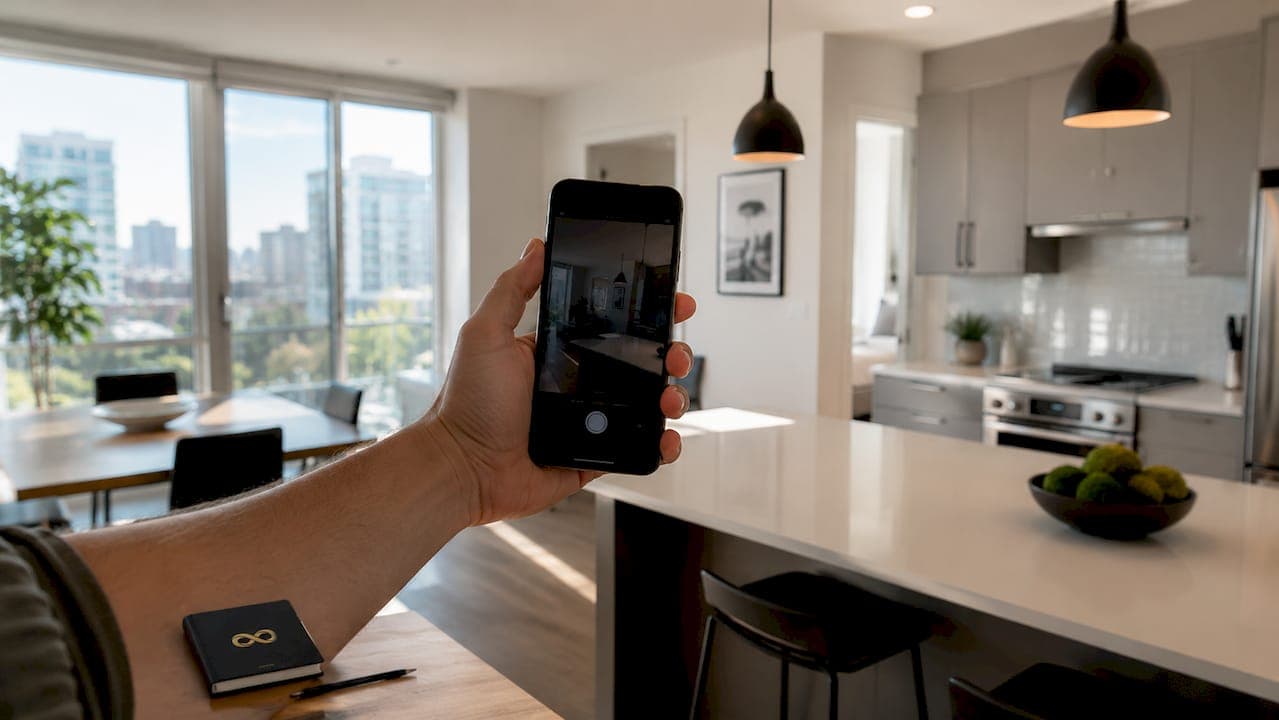
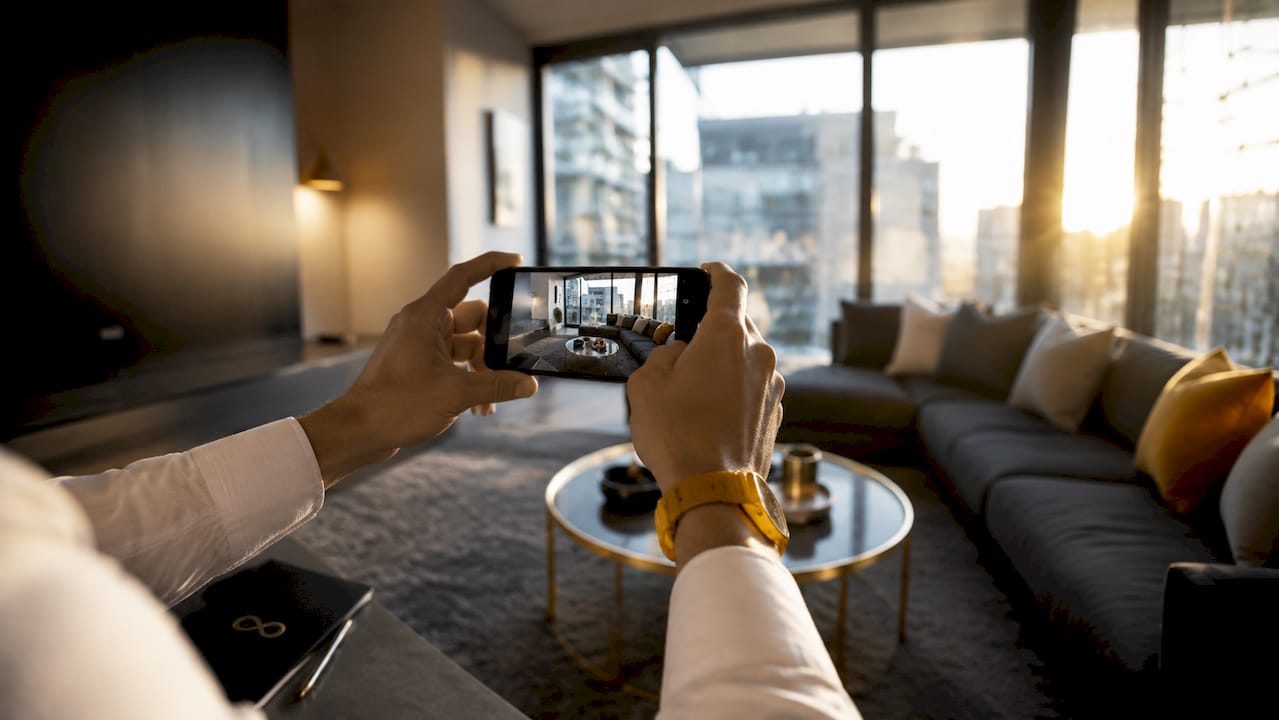
When a professional shoot is not feasible, smartphone photography can still produce strong results if you follow these principles:
- Shoot in landscape orientation only. Portrait photos look amateur on listing platforms.
- Shoot during the day with all interior lights on and all blinds open.
- Declutter every surface before you shoot. Remove trash cans, personal photos, and anything on countertops.
- Shoot from corners and doorways to maximize perceived room size.
- Use AI photo enhancement to correct brightness, color balance, and sharpness after shooting.
Virtual staging is a standard tool for vacant units when physical staging is cost-prohibitive. It must be clearly labeled to maintain tenant trust. Transparency about digital enhancements avoids dissatisfaction after in-person showings.
For Airbnb hosts and short-term rental operators, seasonal photo retakes are worth scheduling. A listing with summer patio photos underperforms in fall and winter. Updating your photo set to reflect the current season keeps your listing competitive year-round and signals active management to prospective guests.
Pro Tip: Highlight in-unit laundry, dedicated parking, and storage in dedicated photos. These top renter priorities are among the most-searched amenity filters on major listing platforms.
Key takeaways
The most effective vacancy listings combine professional-quality interior and exterior photos with advanced formats like 3D tours, sequenced strategically to guide tenant attention from emotional appeal to practical detail.
| Point | Details |
|---|---|
| Interior photos are non-negotiable | Cover every room, including laundry, storage, and utility areas, to reduce tenant uncertainty. |
| Exterior shots signal property quality | A well-photographed exterior communicates active maintenance and professional management. |
| Advanced media filters leads | 3D tours and video walkthroughs attract serious tenants and reduce unqualified showings. |
| Photo count and order matter | Use 15–20+ photos sequenced from hero shot to amenities to maximize engagement. |
| Seasonal updates pay off | Airbnb hosts and short-term rental operators should retake photos each season to stay competitive. |
What I've learned about property photos that most guides won't tell you
After years of watching landlords and property managers make the same avoidable mistakes, I've come to one clear conclusion: most vacancy photo problems are not technical. They are psychological. Landlords photograph what they are proud of and skip what they are embarrassed by. That instinct produces misleading listings and disappointed tenants.
The goal of vacancy photography is not glamor. It is clarity. A tenant who sees an accurate, well-lit photo of a small bathroom will not be surprised at the showing. A tenant who sees a cropped, flattering photo of that same bathroom will feel misled. Misleading photos do not just waste your time. They damage your reputation and reduce lease renewal probability.
The most underrated photo type in any rental listing is the utility shot: the laundry closet, the storage room, the parking space. These images answer the practical questions that determine whether a tenant applies. Skipping them forces tenants to ask, and many will not bother asking. They will just move on to the next listing.
My recommendation for 2026 is to treat your photo set as a living asset. Update it when you make improvements, when seasons change, and when the market shifts. An Airbnb host who refreshes photos in september before the fall travel season will outperform a competitor running the same photos from two years ago. The same logic applies to long-term rentals. Fresh photos signal a well-managed property, and that signal attracts better tenants.
— Richard Lopez
Proofe makes professional vacancy photos accessible
Getting professional-quality listing photos used to mean hiring a photographer, scheduling a shoot, and waiting days for edited files. Proofe changes that equation entirely.
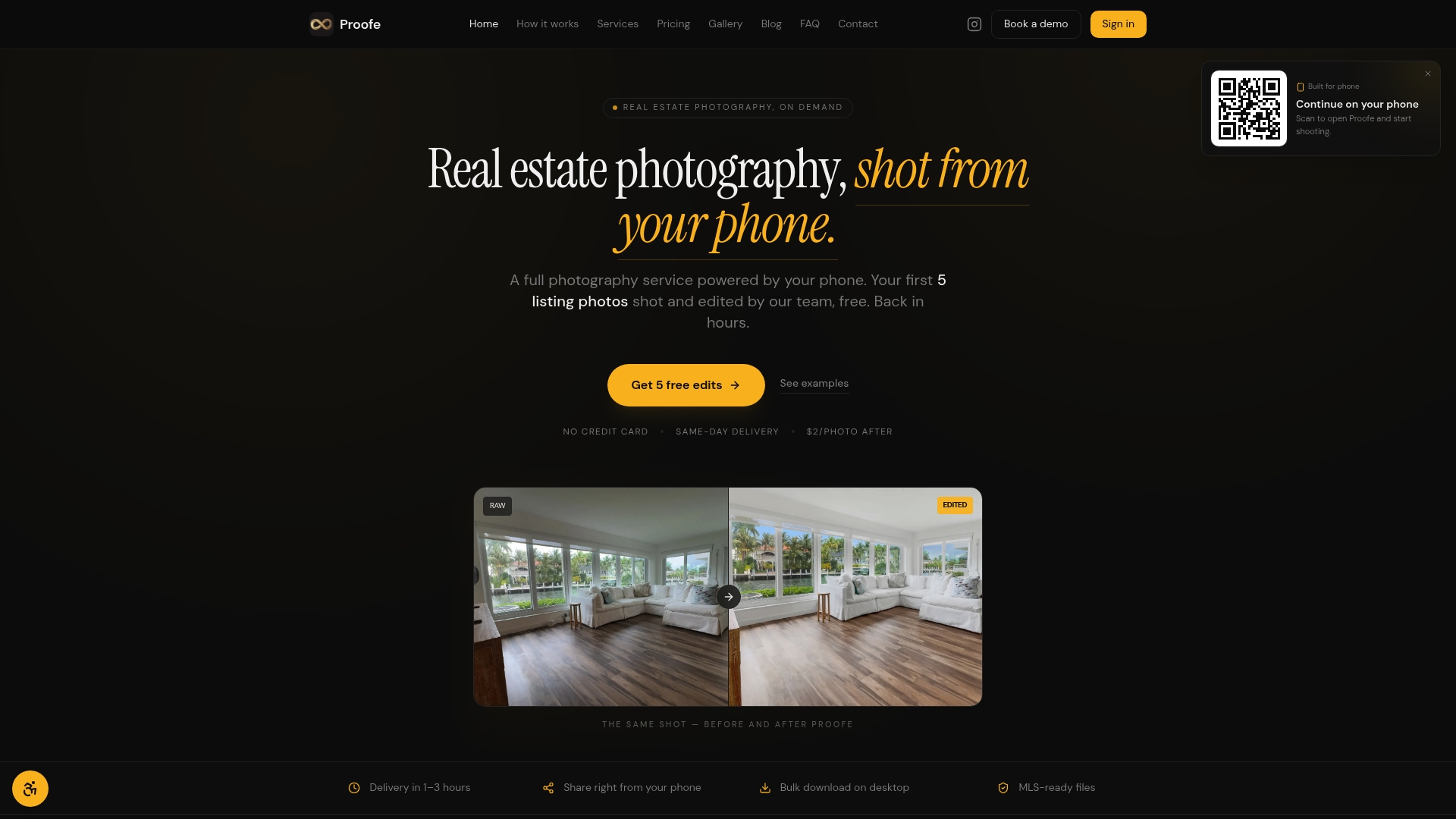
With the Proofe real estate photo app, you shoot from your smartphone and Proofe's AI enhancement handles the rest. Brightness, color, and clarity are corrected automatically. You get MLS-ready files the same day. For property managers handling multiple vacancies, that speed matters. Proofe also offers virtual staging and bright room edits for units that need extra polish. Your first five photos are free, so you can see the results before you commit. Visit Proofe to get started.
FAQ
How many photos does a rental listing need?
Experts recommend a minimum of 10–15 photos per rental listing, with 20 or more photos producing significantly higher engagement on major platforms.
What should the first photo in a rental listing be?
The first photo must be a bright, inviting hero shot of the living room or kitchen. Avoid bathrooms, dark rooms, or cropped exterior shots as the opening image.
Is virtual staging allowed for rental listings?
Virtual staging is widely accepted for rental listings, but every virtually staged image must be clearly labeled as such to maintain transparency and tenant trust.
Do drone photos improve rental listings?
Drone photos improve listings for large properties, luxury units, and rentals where neighborhood context or outdoor space is a selling point. They show layout and surroundings in a way ground-level photos cannot.
How often should Airbnb hosts update their listing photos?
Airbnb hosts should update listing photos at each major season change. Seasonal photos keep listings visually current and signal active management to prospective guests.