
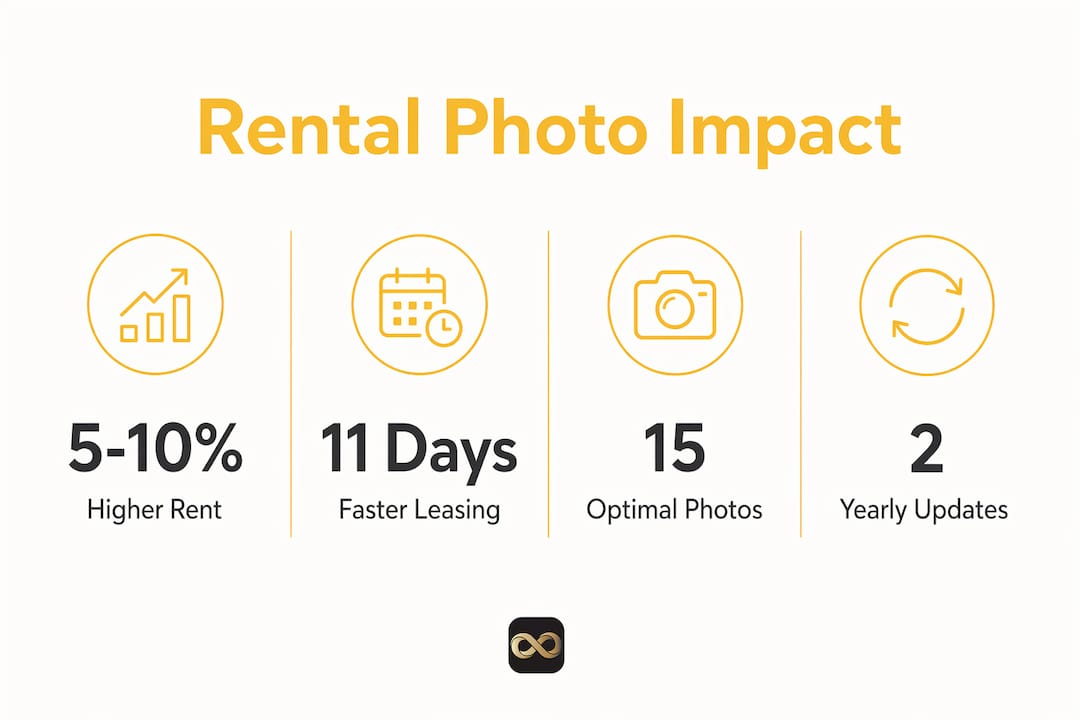
Photo quality is the single most controllable factor that determines how fast your rental leases and at what price. Professional-quality photos command 5–10% higher rents and generate 24–40% more bookings than amateur images. That gap compounds over a full year of occupancy. Landlords and real estate professionals who treat listing photography as an expense miss the point entirely. It is income protection. This guide breaks down how photo quality affects rental price at every stage of the leasing process, from first click to signed lease, and what you can do about it today.
How photo quality affects rental price and tenant perception
Tenant decisions happen fast. Initial impressions form in 2.5 seconds of viewing a listing. That means your cover photo either earns the click or loses the prospect before they read a single word of your description.
High-quality photos do more than attract views. They attract the right views. Professional photos attract serious, higher-quality tenants while filtering out unqualified inquiries. That filtering effect reduces your screening time and lowers the cost of finding a reliable, long-term renter.
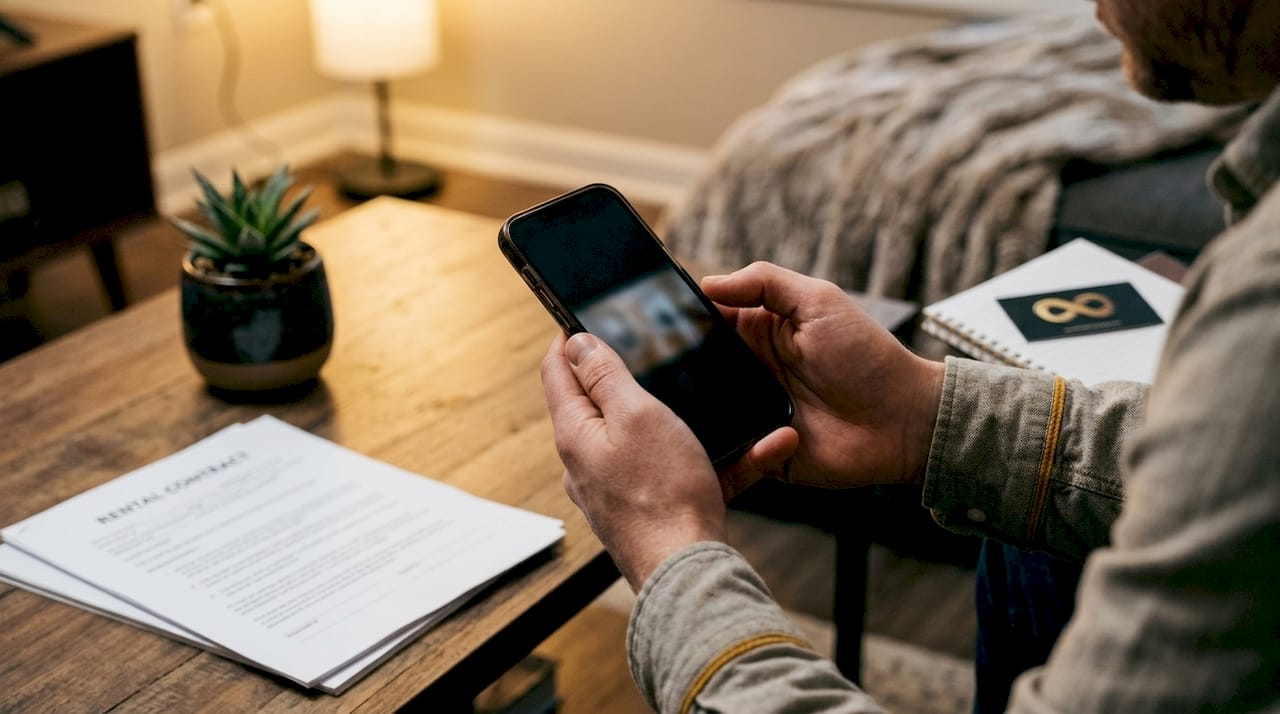
The trust factor matters just as much as the visual appeal. Clear, honest photos answer the questions tenants carry into every search: Is the kitchen actually that size? Does the living room get real light? When photos answer those questions accurately, tenants arrive at showings already confident. When photos mislead, even slightly, prospects feel deceived and disengage.
Here is what the data shows about listing engagement:
- Listings with professional photos receive up to 61% more inquiries than listings with amateur images.
- Listings with high-quality photos get over 100% more views due to engagement factors like cover photo quality and gallery depth.
- Poor photos attract occasional inquiries from less qualified tenants, increasing screening costs and reducing application quality.
The impact of photo quality on rent is not theoretical. More qualified inquiries mean more competitive applications, which gives you the pricing power to hold firm on your asking rent rather than discount to fill a vacancy.
Key elements of photo quality that drive higher rents
Not all photo improvements deliver equal results. Specific technical and compositional choices separate listings that command premium rents from those that sit on the market.
-
Gallery size. Optimal photo galleries contain 10–15 images with a strong cover photo that can increase booking rates by 25–30%. Fewer photos leave tenants with unanswered questions, which kills confidence and reduces inquiry rates.
-
Cover photo selection. Your cover photo is your headline. Choose the most visually compelling room, typically the living area or kitchen, shot with natural light and a wide angle that shows scale accurately.
-
Natural lighting. Natural lighting and minimal editing produce the best results for attracting qualified tenants and sustaining rental price. Shoot during the day, open all blinds, and turn on every interior light to balance the exposure.
-
Accurate representation. Photos must show the property as it actually looks. Renters require photos that clearly answer questions about layout, lighting, amenities, and current condition before they commit to a showing.
-
Room coverage. Photograph every room a tenant will use: kitchen, living room, all bedrooms, bathrooms, storage, outdoor spaces, and parking. Skipping rooms signals something is being hidden.
-
Seasonal and condition refreshes. Airbnb hosts and long-term landlords alike benefit from updating photos when seasons change or after property improvements. A summer photo set showing a bright, green backyard performs differently than the same yard photographed in winter. Refreshing images around seasonal transitions keeps your listing competitive year-round.
Pro Tip: Shoot your exterior photos in the morning when the sun lights the front of the property. Front-lit exteriors look welcoming and spacious. Backlit or shadowed exteriors look uninviting, regardless of how nice the property actually is.
For a deeper look at lighting techniques for rentals, the right setup makes a measurable difference in how tenants respond.
Does photo quality reduce vacancy time and increase rental ROI?
The financial case for photo investment is direct. Professional photography reduces market time by an average of 11 days. That is 11 days of rent you collect instead of losing.
"Investing $300 in professional photos can save thousands in vacancy costs by reducing vacancy days and avoiding rent reductions. Vacancy costs and rent cuts compound losses that affect annual income and property valuation adversely."
Consider a concrete example. A property renting at $2,500 per month sits vacant for 27 days, which is the average vacancy period in San Diego. That vacancy costs roughly $2,250 in lost rent. Professional photography that cuts vacancy by 11 days recovers approximately $917 in a single lease cycle. The photography investment pays for itself in the first month.
The ROI math changes further when you factor in rent level. A landlord who holds firm at $2,500 because strong photos attract qualified applicants earns $300 more per year than one who discounts to $2,475 to fill a vacancy faster. Over a five-year tenancy, that $25 monthly difference adds up to $1,500 in additional income, all from a one-time photo investment.
| Scenario | Vacancy days | Lost rent | Photo investment | Net gain |
|---|---|---|---|---|
| Amateur photos | 27 days | $2,250 | $0 | $0 |
| Professional photos | 16 days | $1,333 | $300 | $617 |
| Professional photos + AI editing | 14 days | $1,167 | $150 | $783 |
Photo quality investment returns are often realized within days via increased net operating income and shorter vacancies, making photography a standard operational practice rather than an optional upgrade.
Common photo mistakes that cost landlords money
Most photo quality problems fall into a predictable set of errors. Recognizing them is the first step to fixing them.
- Over-editing and heavy HDR. Candidates detect manipulative photo editing immediately. Artificially saturated colors, blown-out skies, and warped perspectives signal dishonesty. Tenants who feel misled do not apply, or worse, they apply and then back out after the showing.
- Too few photos. A six-photo gallery for a three-bedroom apartment tells tenants you are hiding something. Incomplete galleries cause confusion and increase repetitive communication, both of which waste your time.
- Outdated images. Photos from three years ago that show different furniture, paint colors, or landscaping create expectation mismatches. Tenants arrive expecting one property and find another.
- Skipping key rooms. Missing bathroom or kitchen photos are the most common omission. These are the rooms tenants scrutinize most. Leaving them out reduces qualified inquiries significantly.
- Poor lighting choices. Dark, shadowy rooms look small and uninviting. Heavy editing to compensate for poor lighting creates trust gaps that reduce lease conversion even when the initial click rate is high.
Pro Tip: Before publishing your listing, view your photos on a phone screen, not just a desktop monitor. Most tenants browse on mobile. If a room looks dark or cramped on a 6-inch screen, reshoot it or use AI editing to correct the exposure.
For a full breakdown of photo standards for rental listings, there are clear benchmarks worth reviewing before you publish.
Practical steps to use photo quality as a pricing tool
Treating photography as a recurring operational task, rather than a one-time setup, keeps your listing competitive and your rent at market rate.
-
Choose the right capture method. Professional photographers deliver consistent results, but high-quality smartphone photography with AI enhancement now produces MLS-ready images at a fraction of the cost. The choice depends on your property's price point and your budget. For most mid-market rentals, a well-shot smartphone gallery with professional editing outperforms a rushed professional shoot.
-
Schedule seasonal photo refreshes. Update your photos at least twice a year. Spring and fall are the highest-traffic rental seasons. Fresh photos timed to those windows improve listing performance when competition is highest. Airbnb hosts should refresh photos before each peak season to capture the best booking rates.
-
Use AI editing responsibly. AI editing tools correct exposure, balance color, and remove distractions without creating unrealistic images. The goal is accuracy, not fantasy. AI editing improves dim rental photos by restoring natural light levels, not by fabricating them.
-
Integrate photos into your vacancy strategy. Photography is the first hook in your leasing process. Pair strong photos with accurate descriptions, competitive pricing, and fast response times to maximize the conversion rate from inquiry to signed lease.
-
Review and update after improvements. New appliances, fresh paint, updated flooring, or landscaping changes all warrant a photo refresh. Outdated photos undervalue your property and attract tenants who expect the old version.
For landlords evaluating whether smartphone photos can replace professional shoots, the answer increasingly depends on the editing quality applied after capture.
Key Takeaways
Photo quality directly controls rental price potential, vacancy duration, and tenant quality, making it one of the highest-return investments a landlord can make.
| Point | Details |
|---|---|
| Photo quality raises rent | Professional photos support 5–10% higher rents by attracting qualified, competitive applicants. |
| Vacancy reduction pays fast | Cutting vacancy by 11 days on a $2,500 rental recovers nearly $917 in a single lease cycle. |
| Gallery size matters | A 10–15 image gallery with a strong cover photo increases booking rates by 25–30%. |
| Avoid over-editing | Manipulated photos damage tenant trust and reduce lease conversion despite high click rates. |
| Refresh photos seasonally | Updating photos before peak rental seasons keeps listings competitive and supports market-rate pricing. |
Why I stopped treating rental photos as a one-time task
The landlords I have seen struggle most with vacancy share one habit: they photograph a property once, publish the listing, and never revisit the images. They assume the photos are "good enough" and focus their energy on pricing adjustments instead.
Here is what I have observed consistently. A $50 rent reduction does not solve a photo problem. It just attracts a different, often less qualified, pool of applicants. The landlord ends up with a tenant who stretched to afford the discounted rate, while the root cause, weak listing photos, goes unaddressed.
The more productive approach is to treat photography as a recurring line item, not a sunk cost. Properties I have seen refreshed with accurate, well-lit photos before spring and fall leasing seasons consistently outperform comparable units with stale images, both in inquiry volume and in the quality of applications received. The photos act as a pre-screening tool. Serious tenants who can afford market rent respond to listings that look like they are managed by serious landlords.
The cost argument against professional photography also collapses quickly under scrutiny. A single avoided vacancy more than covers a year's worth of photo updates. The math is not complicated. The hesitation is mostly habit.
— Richard Lopez
Better listing photos are closer than you think
You do not need a professional camera or a full-day shoot to get photos that command higher rents.
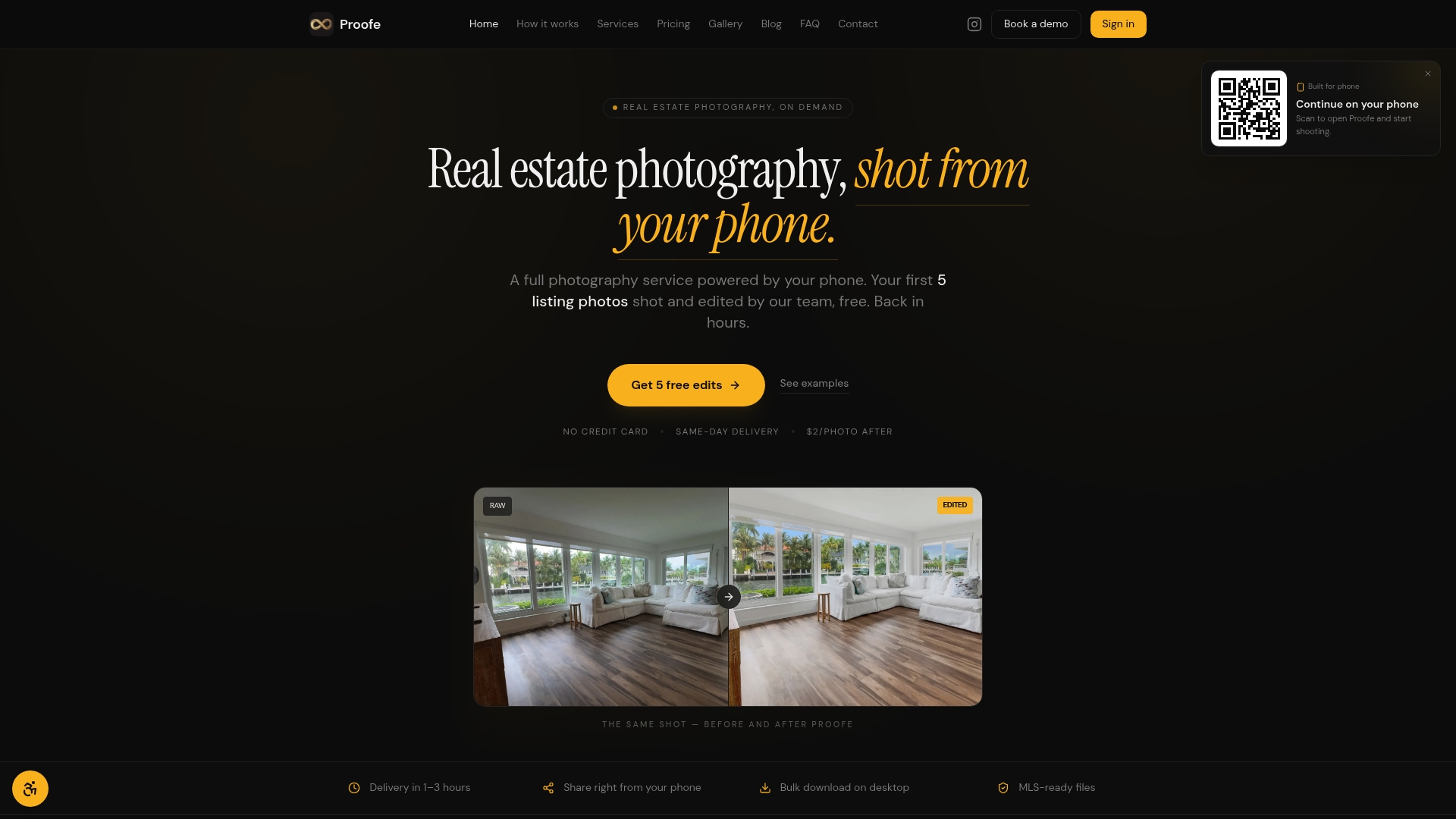
Proofe lets you shoot, AI-enhance, and download professional-quality listing photos directly from your smartphone. The process takes three steps and delivers MLS-ready files the same day. Your first five photos are free, so you can see the difference before committing. Whether you manage a single rental or a full portfolio, Proofe gives you the photo quality that supports market-rate pricing without the overhead of traditional photography services. Airbnb hosts can use Proofe to refresh their listing photos before each peak season, keeping their galleries current and their booking rates strong. Check out the real estate photo app to get started today.
FAQ
How much can better photos increase my rental income?
Professional photos support 5–10% higher rents and reduce vacancy time by an average of 11 days. That combination directly increases annual rental income.
How many photos should a rental listing include?
Optimal galleries contain 10–15 images, covering every room and key amenity. Fewer photos reduce inquiry rates and leave tenants with unanswered questions.
Does photo editing hurt or help a rental listing?
Minimal editing that corrects exposure and color helps. Heavy manipulation that distorts colors or proportions damages tenant trust and reduces lease conversion, even when click rates are high.
How often should landlords update their listing photos?
Update photos at least twice a year, ideally before spring and fall leasing seasons. Refresh after any property improvement, such as new appliances, paint, or landscaping.
Do photo quality improvements work for short-term rentals too?
Yes. Airbnb and other short-term rental hosts see the same pattern: professional photos generate 24–40% more bookings. Seasonal photo refreshes before peak travel periods deliver the strongest results.